
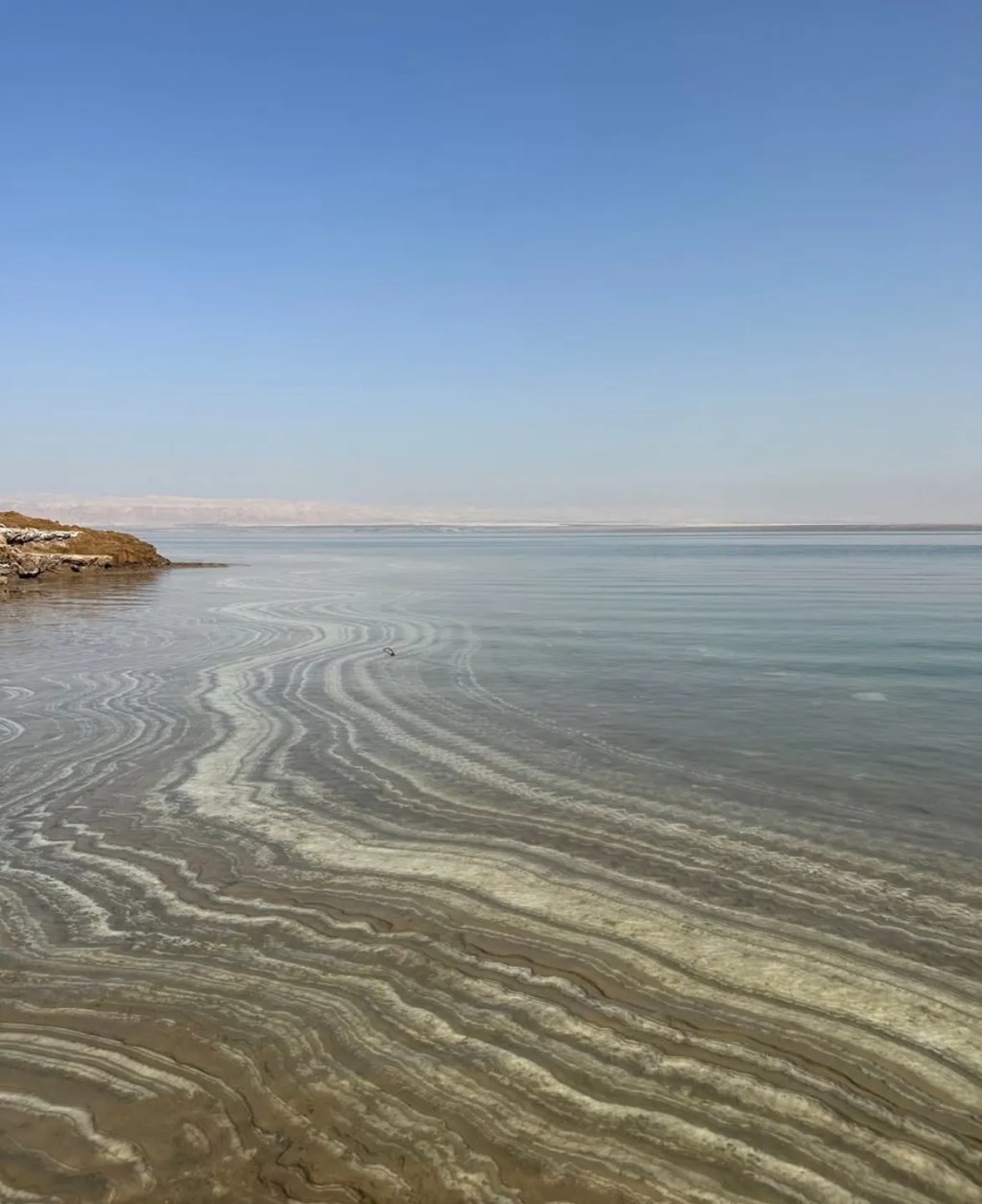
If you visit the Dead Sea during the summer, when the days are long and sticky, it’s best to dip into the water just before sunset or just after sunrise. It’s only an hour’s drive from Amman, a trip marked by a long highway lined with resorts and sun-bleached shops–each one conjuring memories of childhoods spent in the sun, the scent of plastic inflatables and sunscreen thick in the air.
I’m used to visiting the water at dusk, just before dinner. In recent years, the make-shift beach reserved for our favourite hotel, the Kempinski Ishtar, has been enlarged, decorated with a drink stand and two brand-new outdoor showers.
Standing at the shoreline is a meditative experience. You’ll find that the water tends to blend into the sky, creating the illusion that the sea stretches on forever. That couldn’t be further from the truth: the Dead Sea is evaporating at a rapid rate. Its exclusive salinity will soon be a thing of the past–a chapter closed forever, along with Egyptian mummification and centuries of conflict.
If you ask, staff will source you some souvenir salt crystals, and if you’re fortunate, you’ll get a pretty one. However, there is a kind of guilt that comes with taking away from something as ephemeral as the Dead Sea.
If you look like a tourist, someone will inevitably explain the “right” way to enjoy the sea.
- First, you should float in the water for five minutes. It’s no secret that the exceptionally high concentration of salt and minerals nourishes the skin.
- Then, dry off and apply mud to every visible inch of skin (avoiding swimwear, which the mud will permanently stain).
- You’ll be ready to go back into the water once the mud dries under the sun in ten minutes–pass the time by taking photos of your muddy limbs, or conversing with the medical tourist sitting next to you.
It’s best not to spend too much time in the sea, because the salt is almost too potent, and can cause swollen legs. The water has a way of finding every vulnerability and making it sting: a paper cut you didn’t know you had, a tiny scrape barely exposing flesh.
Anecdotally, spending time in the sea heals superficial skin issues like psoriasis and acne. I recall a woman who was often by the water, sitting on the edge of a sun lounger, with dried mud on her arthritic knees. The supposed benefits of the Dead Sea range from miraculous to modest–fifteen minutes of stillness, if nothing else.
 Third Space Magazine
Leave a comment