
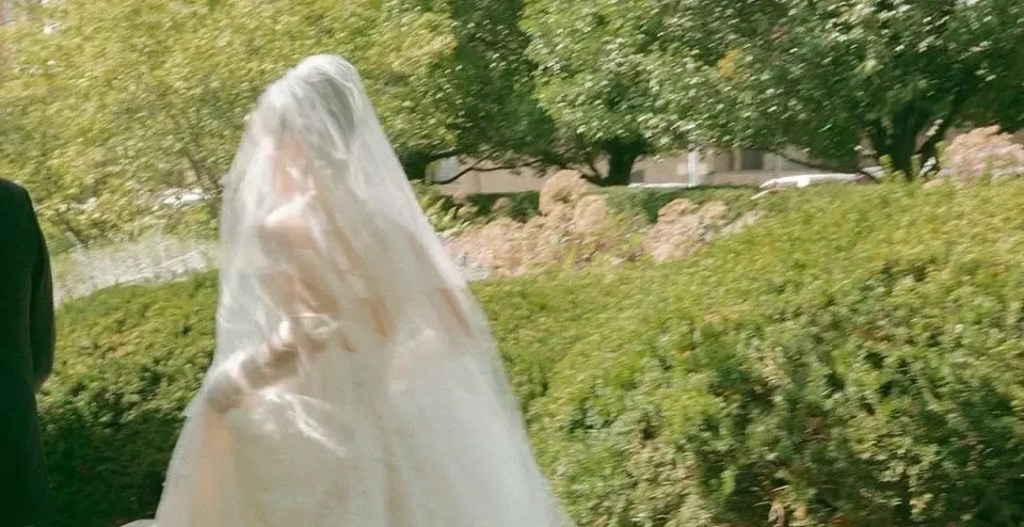
For a garment typically worn only once, the wedding dress carries an almost unbearable amount of importance. It must be palatable but unique, classic yet contemporary–reflective of the bride’s personality without being too trendy or out-of-pocket. In trying to satisfy both personal and cultural expectations, the wedding dress becomes a paradox. A symbol of enduring tradition that is also expected to be tastefully trendy.
At the heart of the dilemma is a question: what exactly is a wedding dress supposed to achieve? In try-on videos and Pinterest boards, the answer seems deceptively simple. It should be beautiful, memorable, and emotionally resonant. But what many modern brides seek, more than anything, is timelessness.
This desire is complicated by our ever-shortening fashion cycles. Bridal trends move at the speed of light, and there’s an increasing pressure to find a sense of individuality within the noise–perhaps to avoid the fate of those looking back at their wedding photos from the puffy-sleeved ’80s and ’90s with regret. But timelessness itself is a fantasy, often constructed in hindsight. A dress only feels timeless if it happens to align with the aesthetics of its era and ages gracefully–by coincidence or sheer luck.
Before Queen Victoria famously chose a white silk satin gown for her 1840 wedding, brides typically wore the best garment they already owned, regardless of colour. Her decision sparked a trend that has evolved into today’s search for the white dress. This shift paralleled the growing commodification of marriage, which popularised over-the-top weddings and crater-sized diamond rings.
And so, ironically, what is marketed as “timeless” bridal fashion is usually a curated repetition of aristocratic aesthetics of silks, satins, lace, and corsets. These features endure not because they resist trend, but because they are the trend, recycled and rebranded with each passing season. The symbolic weight of the wedding dress, first cemented by Victoria, has since been inflated by decades of bridal marketing, Hollywood fantasies, and celebrity weddings, transforming a practical outfit into a culturally loaded costume.
The emotional significance attached to the dress can also obscure its artificial importance. Despite the deeply personal narratives spun around finding the “right dress,” the obsession is often manufactured. As an avid watcher of Say Yes to the Dress, I can testify to the way reality TV has dramatised the process of purchasing a piece of clothing for one day of your life.
Interestingly, the rise of sustainable, affordable weddings often comes with a rejection of the traditional dress. Alternatives like jumpsuits, coloured gowns, and vintage ensembles are gaining traction, though they remain niche. The image of a bride in a white dress still dominates the cultural imagination, no matter how contradictory or exhausting that ideal may be. Timeless? Maybe not. But telling, absolutely.
 Third Space Magazine
Leave a comment