• Swiss-Water Decaf and Other Signs of Gentrification

    Swiss-Water Decaf and Other Signs of Gentrification

    Without giving too much away (like my personal address) it is with great neutrality that I confess that my suburb is finally getting a makeover, and that my childhood home is most likely going to double in value within the next 5 years.

    There’s no denying the steady, almost bubonic sprawl inching further west with each passing year, as more and more funding goes into gentrifying our western suburbs to accommodate a growing population.

    At university, I quickly learned that most of my friends had no real idea where I lived—geographically or otherwise. Anything beyond the northern side of the bridge might as well have been regional.

    Maybe it was the internalised insecurity of growing up in a no-name suburb. Maybe it was the stigma of living somewhere that felt cryogenically frozen in 2002. Or maybe it was simpler than that. Maybe it was all my friends’ proximity to the coast, and my forty-five minute commute to a body of water, that really solidified our socioeconomic status on opposite sides of the spectrum. 

    But it’s 2026 now, and the living crisis in Sydney is at an all-time high. This means, for the first time in history, my suburb has been declared desirable by enigmatic TikTok real estate agents.  

    At a new coffee spot just minutes away from me—a converted warehouse, naturally— I sipped from my $10 cold brew, perusing the cafe’s Google reviews until the critique of a local foodie piqued my attention. 

    {Redacted} is the beginning of the end for this suburb: a sign that the creep of gentrification has truly reached its door.

    Try living next door to two high-rise apartment blocks, I thought.

    I kept scanning the familiar letters of my suburb’s name, in disbelief that anything remotely trendy could be synonymous with it.

    For as long as I can remember, the main promenade of my suburb could be compared to the likes of a vibrant international strip––growers and sellers spilling onto the road, crates stacked too high, fruit sweating in the sun. It was too unorganised to feel metropolitan, yet the war memorial standing proudly in the centre was enough to snap you out of the hallucination. 

    Fragments of my suburb brought great comfort to me—a Cash Converters, permanently wrapped in “Closing Down” banners that had gone all sun-bleached and torn at the ends. Butchers that shouted in foreign tongues: cash only. Produce bartered by little ladies perched on milk crates, who boomed incoherent specials into a karaoke mic. The token charcoal chicken shop we frequented for a Friday night treat. And other fronts. I’m sure. 

    I didn’t spend much time there, it was slightly out of the way from my side of town, but I often passed through on the way home.

    To me, it was iconic: bursting with no-frills culture and fast-paced calamity. It wasn’t my culture, exactly (you’d usually find me at the European deli in the adjacent suburb), but sometimes I wish I embraced it more, growing up. 

    For years, my friends and I caught up for coffee in the next suburb—fifteen minutes by bus felt like a necessary pilgrimage. I used to mourn the absence of a local café within walking distance from my house. Not just any café, but the kind tucked into the dormant remains of an old milk bar, or carved into a heritage building—you know the ones that line the streets of Surry Hills.

    Now we have Swiss-water decaf on our doorstep and pilates studios, multiplying at an alarming rate. It feels strange to realise things aren’t just changing here, but they already have.

    Recently, I immersed myself into the world of alternative medicine (because you either train for Hyrox in your late twenties or you start healing your gut). In the process, I discovered my suburb was riddled with Chinese herbalists, reflexologists and spiritual readers—services I had once travelled interstate to access. 

    What the hell? 

    With a smile, I tucked my medicinal herbs into my bag, waved at the jolly elderly couple, and walked home—peering into sage-infused studios, housing palm readers and other spots I’d saved on Google Maps along the way. Until recently, I would never have guessed I’d be wandering through my own suburb like a tourist.

    Upon reaching my street, I took in the emptied blocks of land, standing awkwardly beside five-storey apartment buildings, the drilling humming like white noise at the back of my mind. A young-ish woman in Doc Martens and purple hair slipped into the brand-new complex, a family trailing behind her with their two golden somethings. I took notice of the mass immigration of purebred oodles cashing up around town. 

    But in all honesty, it is nice to see new faces, from all generations and demographics. There’s a strange comfort in being surrounded by families and younger couples choosing to build a new life here. Choosing my childhood suburb to call home. 

    Despite the passage of time and everything that comes with it, the bustling, unassuming version of the town I grew up in is forever etched into my memory.

    And for now, I can’t deny the small indulgence of a $10 cold brew within walking distance.

    Is that so terrible to admit?

    Words by Yianna Tromboukis

  • The Rise of Independent Perfumers in Small-Batch Fragrance and our favourite scents of 2026 

    The Rise of Independent Perfumers in Small-Batch Fragrance and our favourite scents of 2026 

    In an era of endless launches and permanent collections, a shift is taking place in fragrance—one that favours scarcity over scale. Independent perfumers are returning scent to something tactile and time-bound, working in small batches where materials vary, editions disappear, and each release carries a sense of occasion. Rather than buying a signature to last forever, wearers are embracing perfume as something lived through a season. 

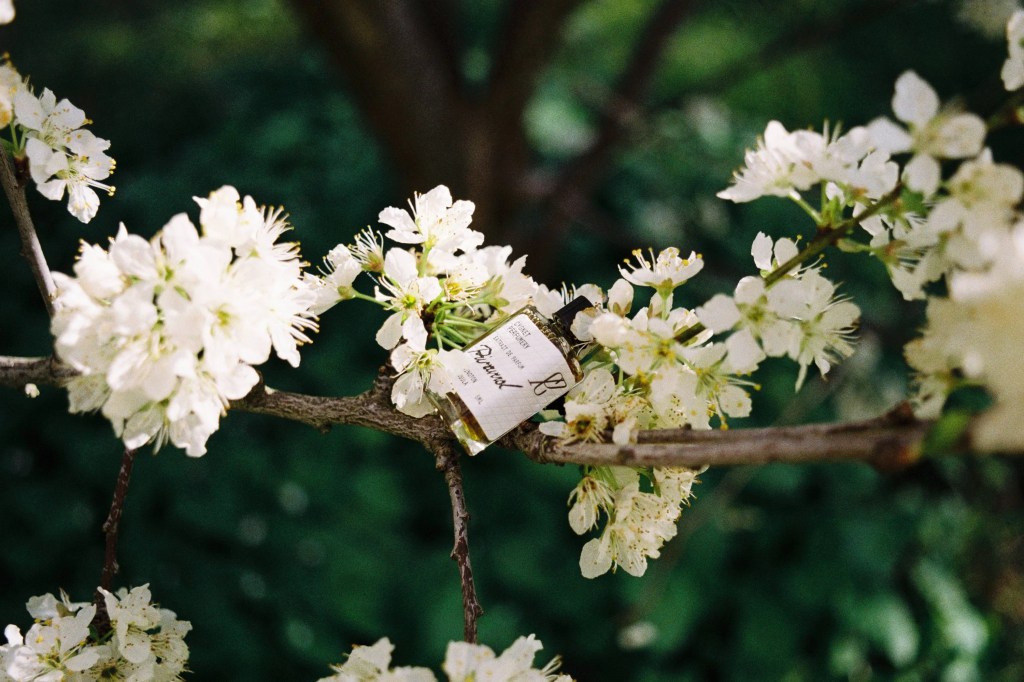
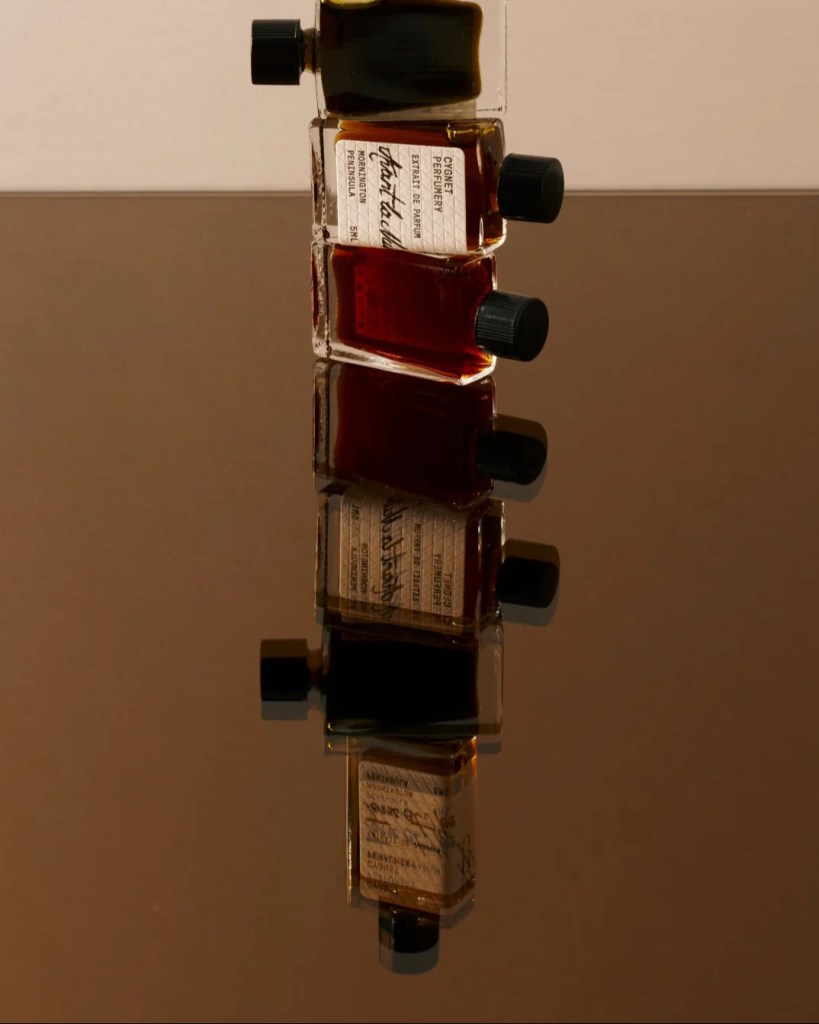
    Cygnet Perfumery and Perdrisat Perfume sit at the forefront of this movement, favouring botanical complexity and subtle evolution over projection. Below, we explore what makes each house distinct and share some of our favourite fragrances of 2026 (so far) that capture this shift in scent culture.

    CYGNET PERFUMERY

    From Cygnet, the blends lean atmospheric: soft florals warmed by resinous depth, woods that soften into skin, citrus notes that fade into something almost nostalgic. Each fragrance feels crafted rather than manufactured, unfolding on the skin with the kind of nuance and complexity that only thoughtfully sourced botanicals can provide. Sondrine, founder of Cygnet Perfumery, brings to her work a deep reverence for the landscapes that inspire her, each perfume unfolding as a story rather than a formula.

    AVANT LA NUITCognac, Cinnamon, Peach, Dried Fruits, Ylang Ylang, Tobacco, Cedarwood, Nootka, Sandalwood, Amber Accord.

    PERDRISÂT

    Perdrisat Perfume approaches scent with a poetic curiosity that feels deeply personal. Inspired by narratives and subtleties whether a memory, a place caught in fog, or the warmth of wood and spice—Perdrisat’s editions channel a rare kind of storytelling that favours nuance over volume. Each creation is a blend of conceptual depth and artisanal precision that has earned Perdrisat a distinct place in the world of independent perfumery.

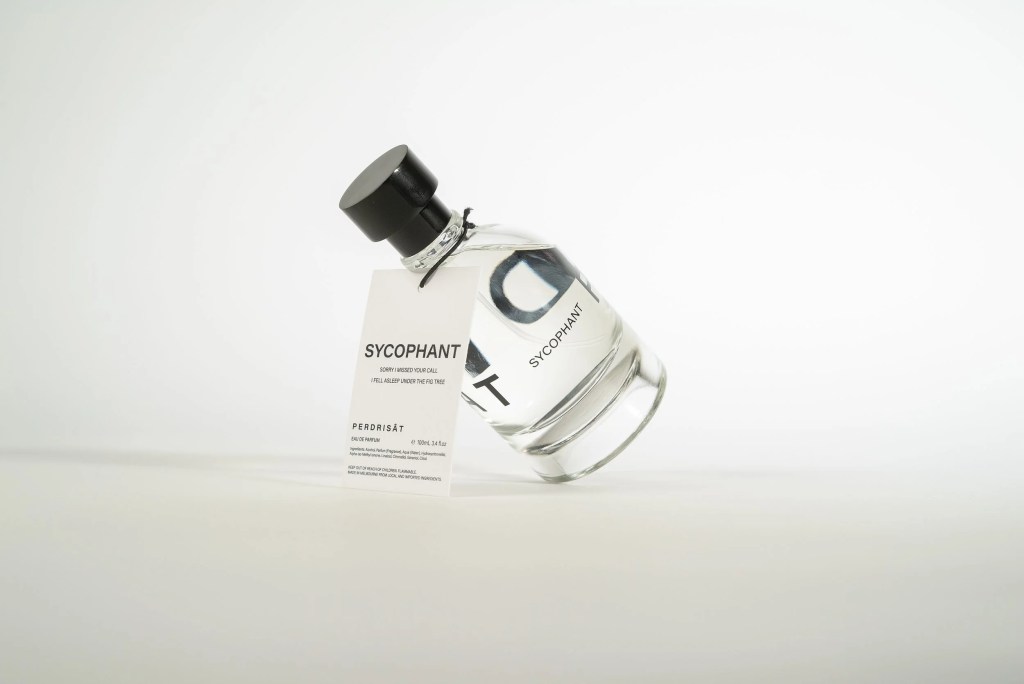
    SYCOPHANTFig leaf, Milk, Sap, Cedar, Ambrette

  • Morocco Is a Mirror

    Morocco Is a Mirror

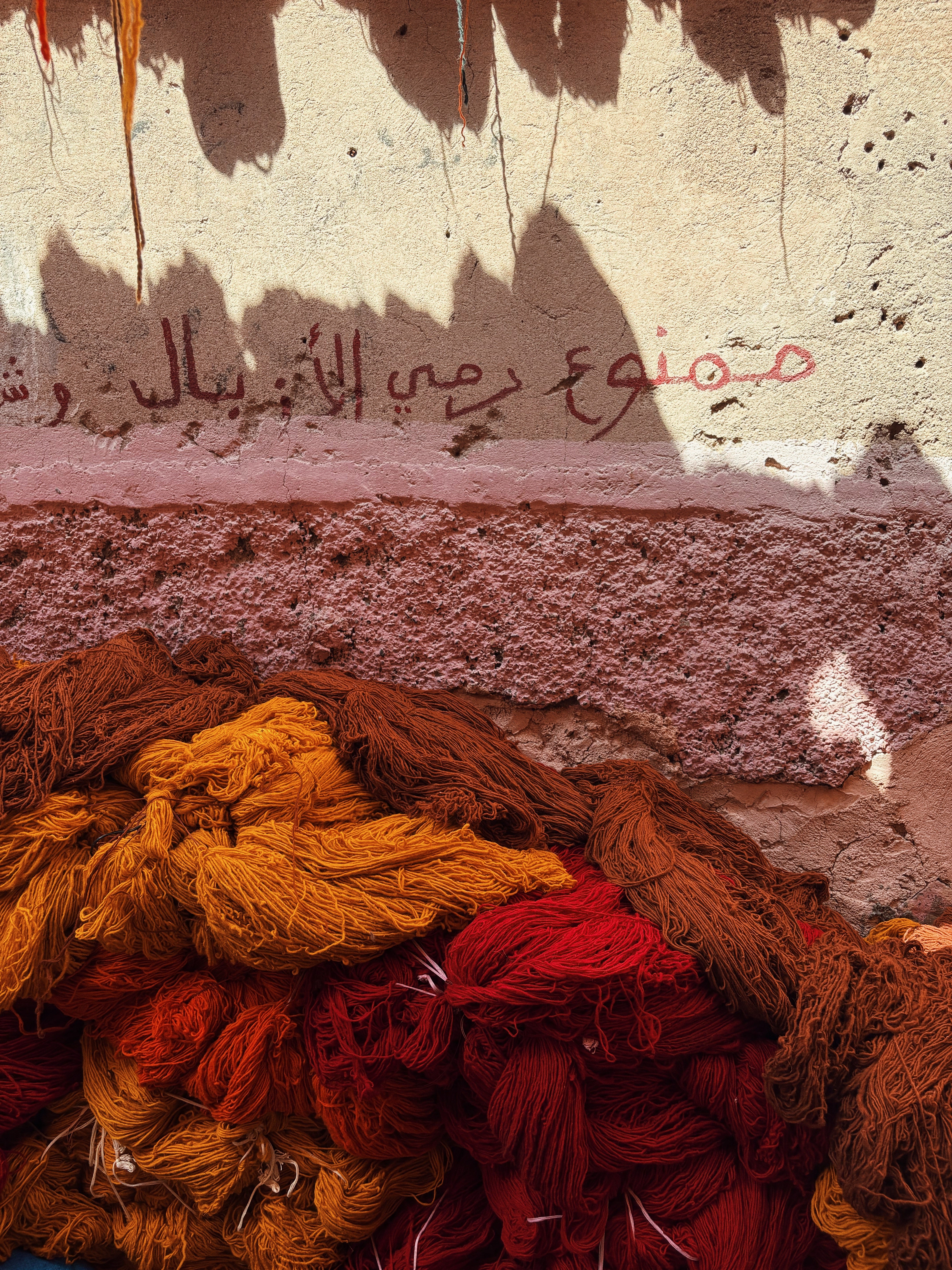
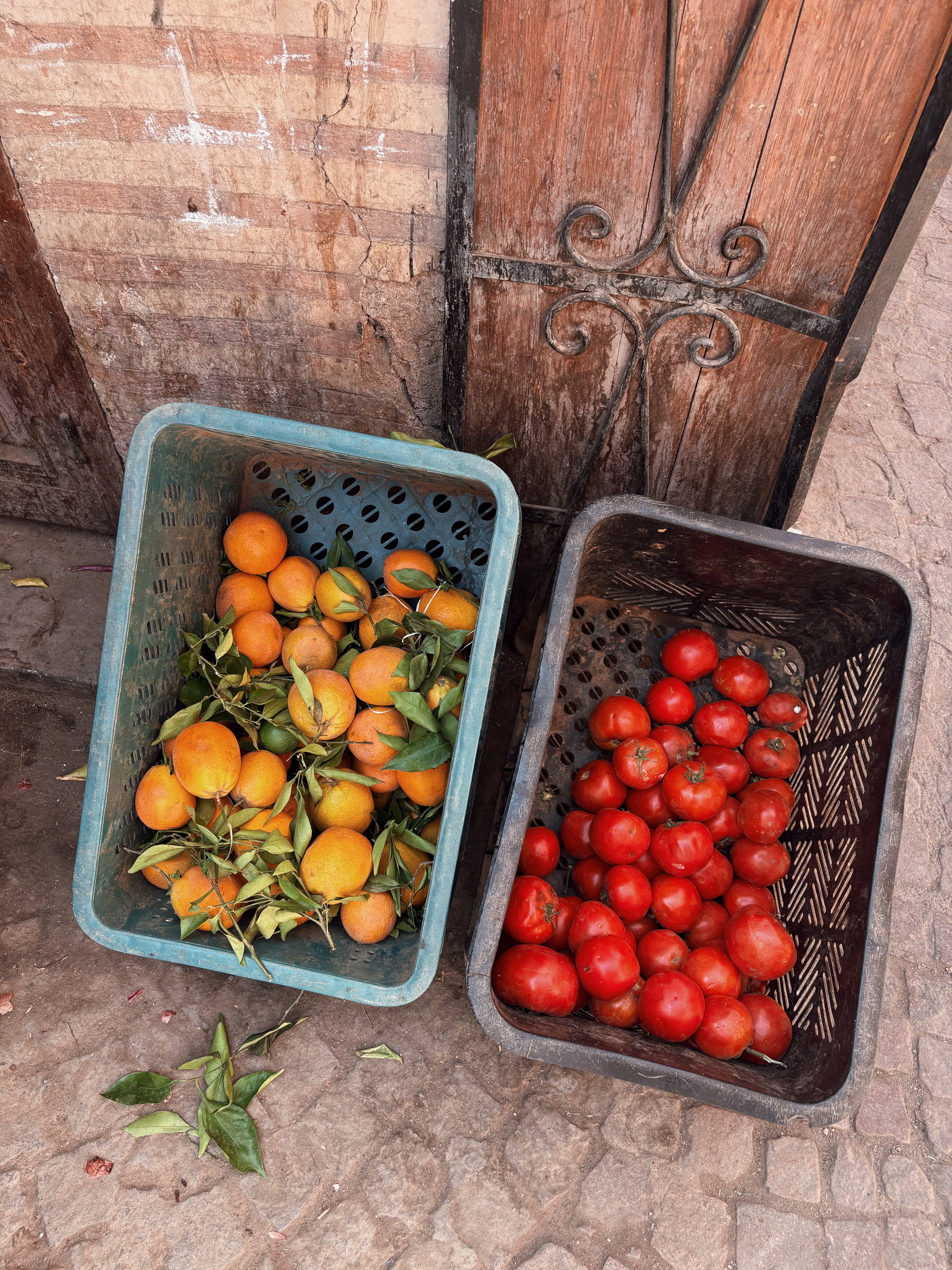
    The heat met us before our driver did, but it was dry and tolerable as we sat in the backseat and endured the last three hours of travel. The transfer was a monochromatic transition from city walls to farmhouses, interrupted only by palm, argan, and olive trees standing proud in the arid landscape.

    After spending one week visiting a friend doing research in Ghana, I moved north to spend another week in Morocco with family and friends. The trip was an unmet tension between myself and spaces unbeknownst as I moved through the streets of Essaouira and Marrakech.

    When you’re thrown into a space geographically and culturally distinct from the customary, it’s easy to reduce it down to presupposition–where phonetic and linguistic barriers would render you parti pris in your experience of it all. I entered with the subconscious assumption that I would have no point of familiarity. But when you meet a place where it’s at, it reflects facets of yourself revealed only in the unfamiliar–a woeful but wonderful paradox.

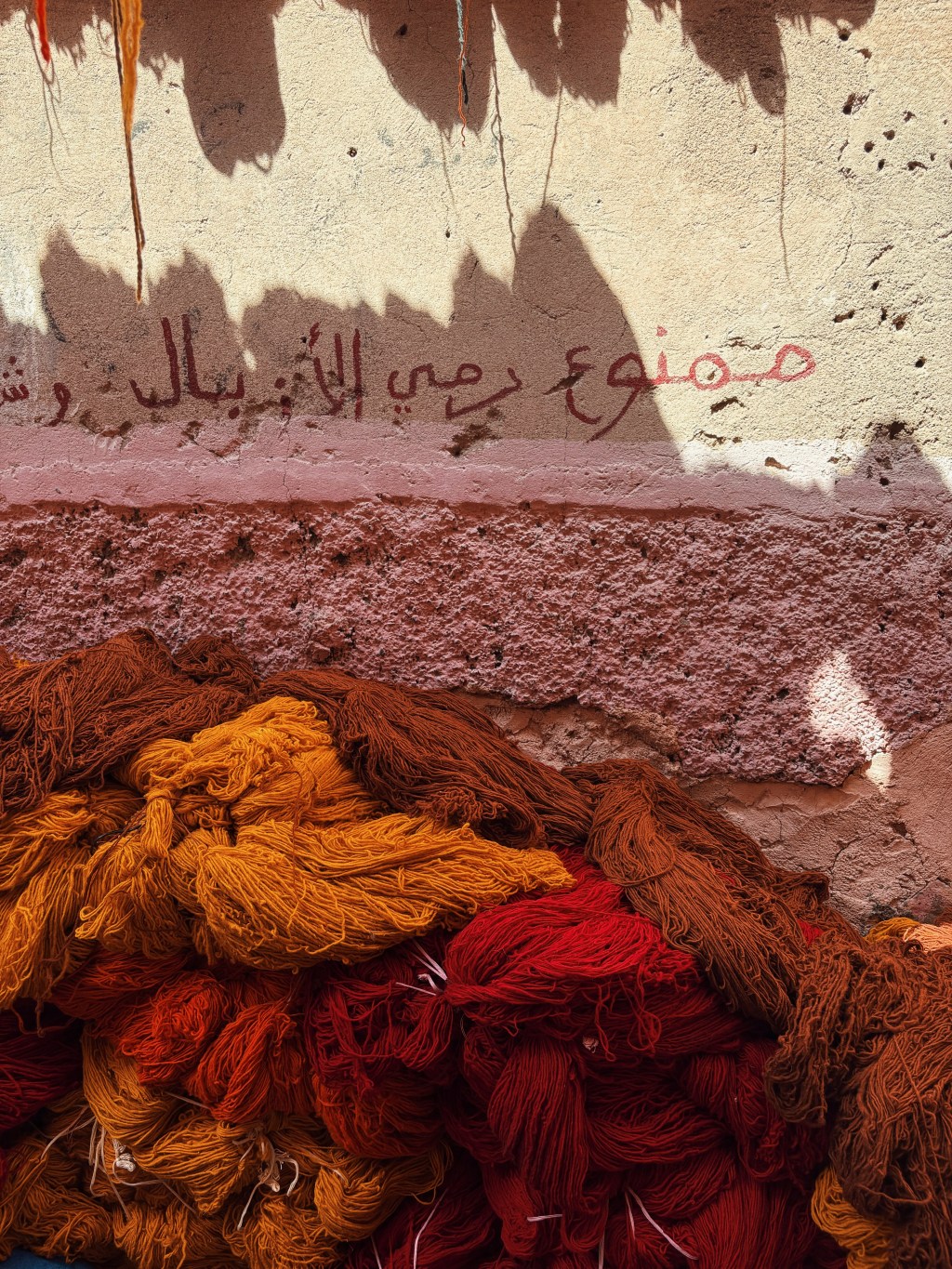
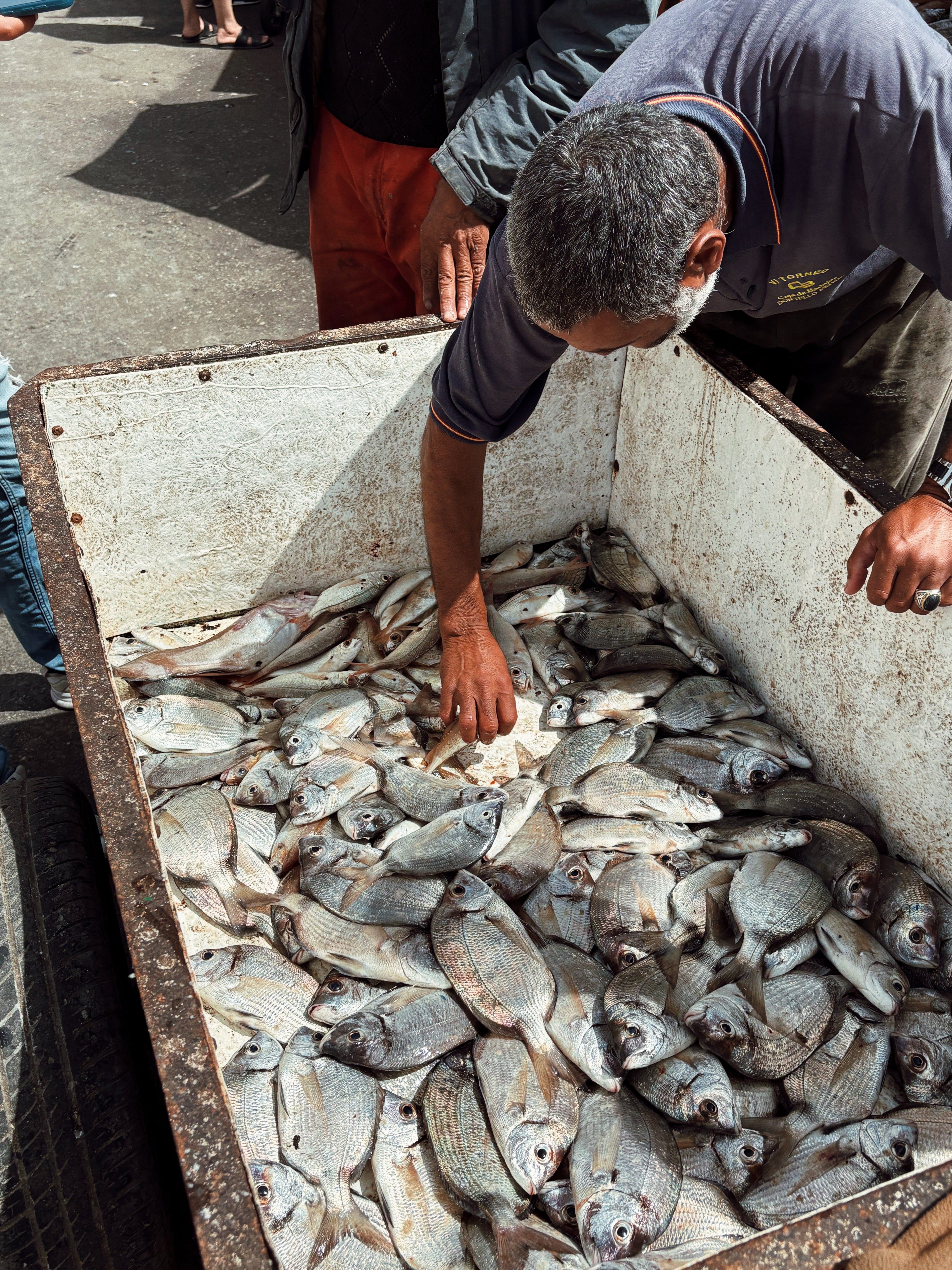
    Blue, all blue, the doors, the ocean, the fish stands. Essouira was cooling, both for the soul and the body and most days were spent walking through the medina, finding ceramic and silver wares to fill my luggage with. It took two days to confidently navigate my way through the main streets; this was abetted by the shopkeepers who recognised us (c’est les Australiens) and we would wave at them until we turned the corner.

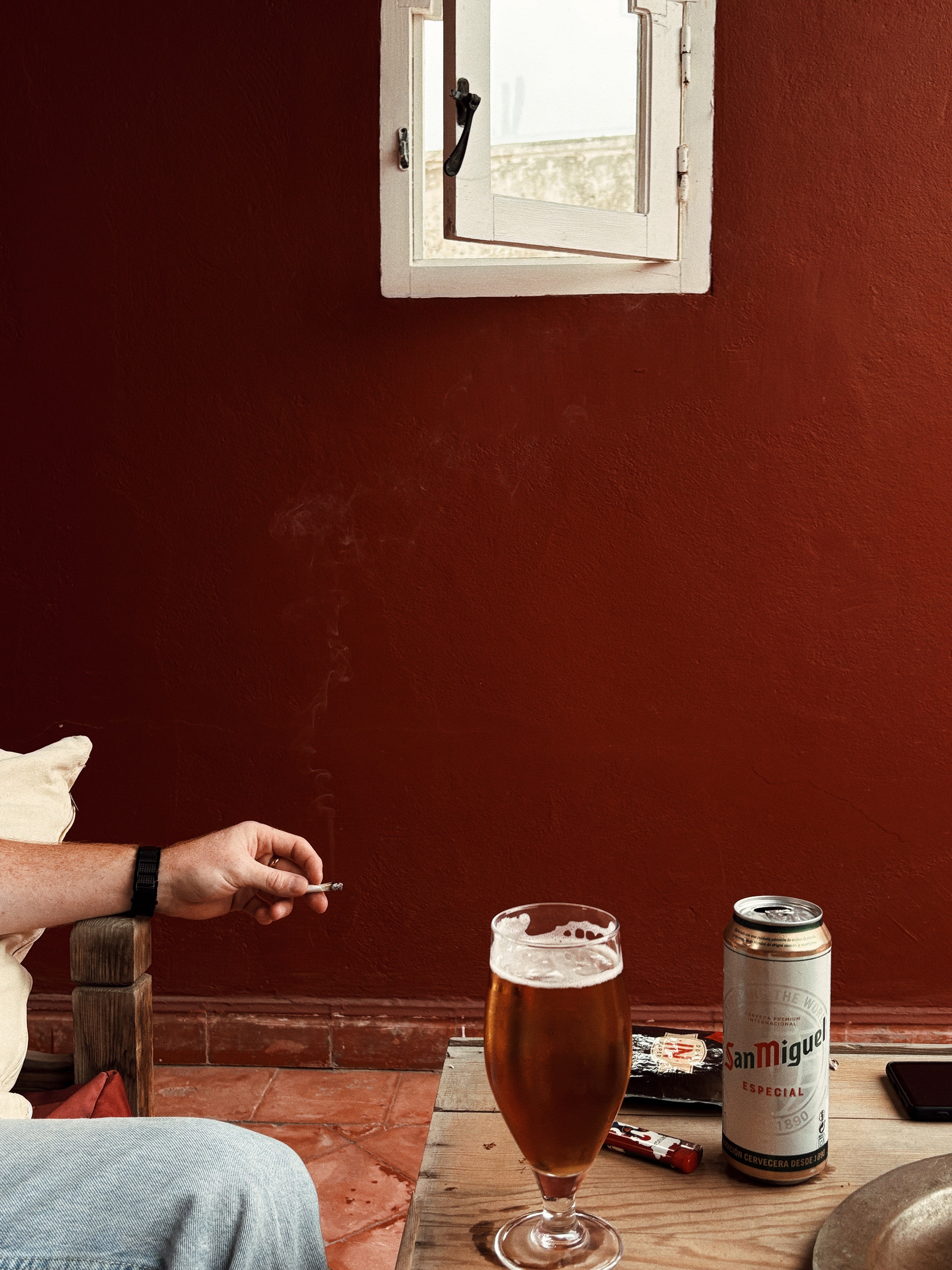
    On the last day we made sangria and drank it on the top terrace (yes, we had two). White wine, fresh juice and cut up peaches swam in a teapot as we smoked, listening to music and watching the cats traverse across the stones and washing lines which framed the skyline.

    Later, we found ourselves in an outside bar. Crowds watched as the bodies below danced in the open air, moving to the sounds of the night. Loud music fed us until we surrendered at 1:30 am. We skipped along the water and back inside the city walls, running through the streets and past the cats as we clung to the last snatches of Summer.

    Four days back in Marrakech where the crowds and noises overwhelmed my senses and obscured my thoughts. Everything was an acceleration of the former and we frequently sought solace on the rooftops of restaurants and riads, where the heat danced through the doorways and windows.

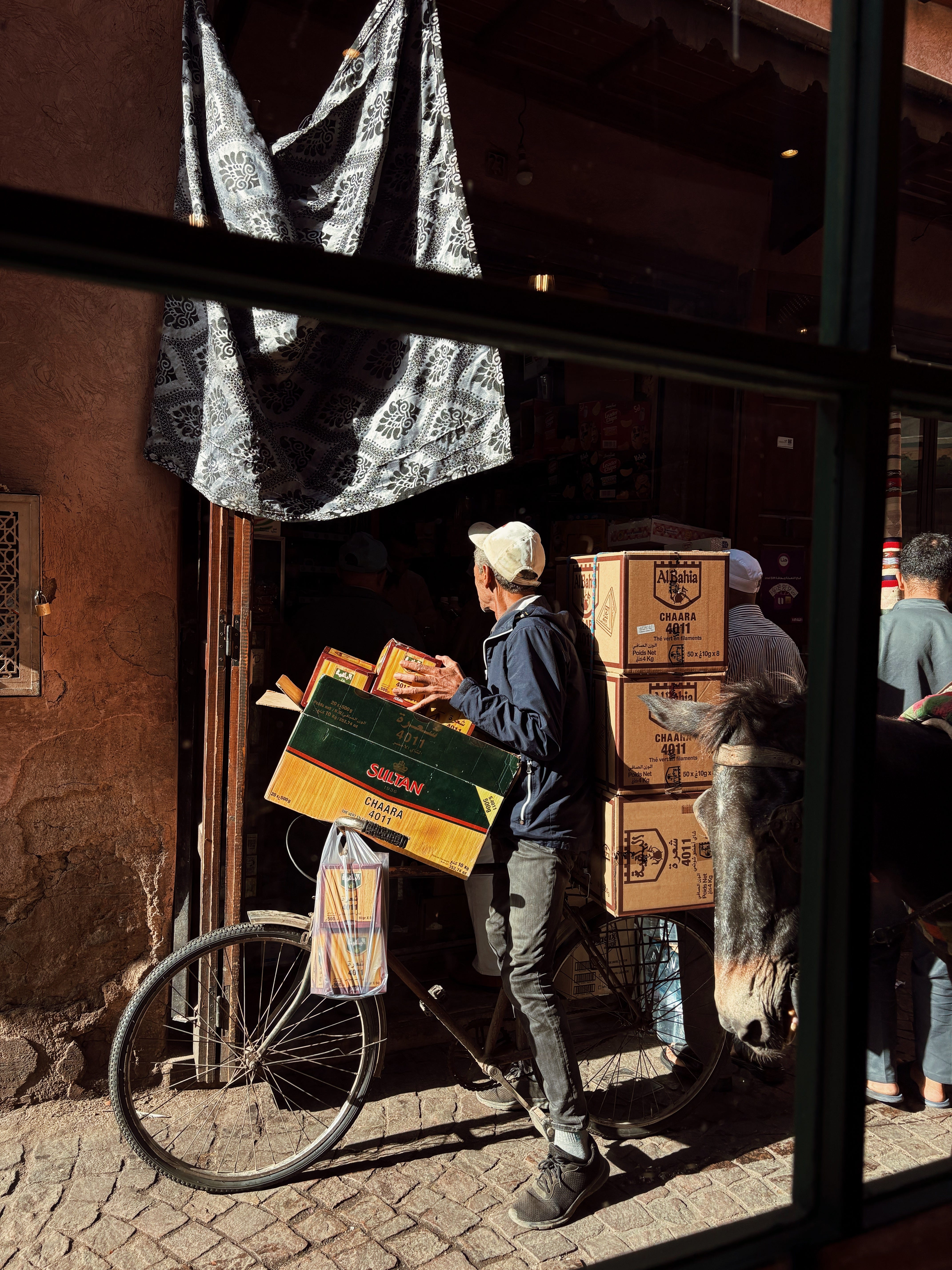
    The city expresses itself by virtue of the people–foundational to how the streets operate. If you wake early you can feel the rhythm before the crowds drown it out. Mint tea on silver platters is a pharos for understanding the shared life here. Poured from a height and shared to neighbours, friends and strangers. After all, who are we if not our interactions with others? If not our moments of communion? Collectivism is the reflector of humanity. All it takes is some time, and reflection to see it.

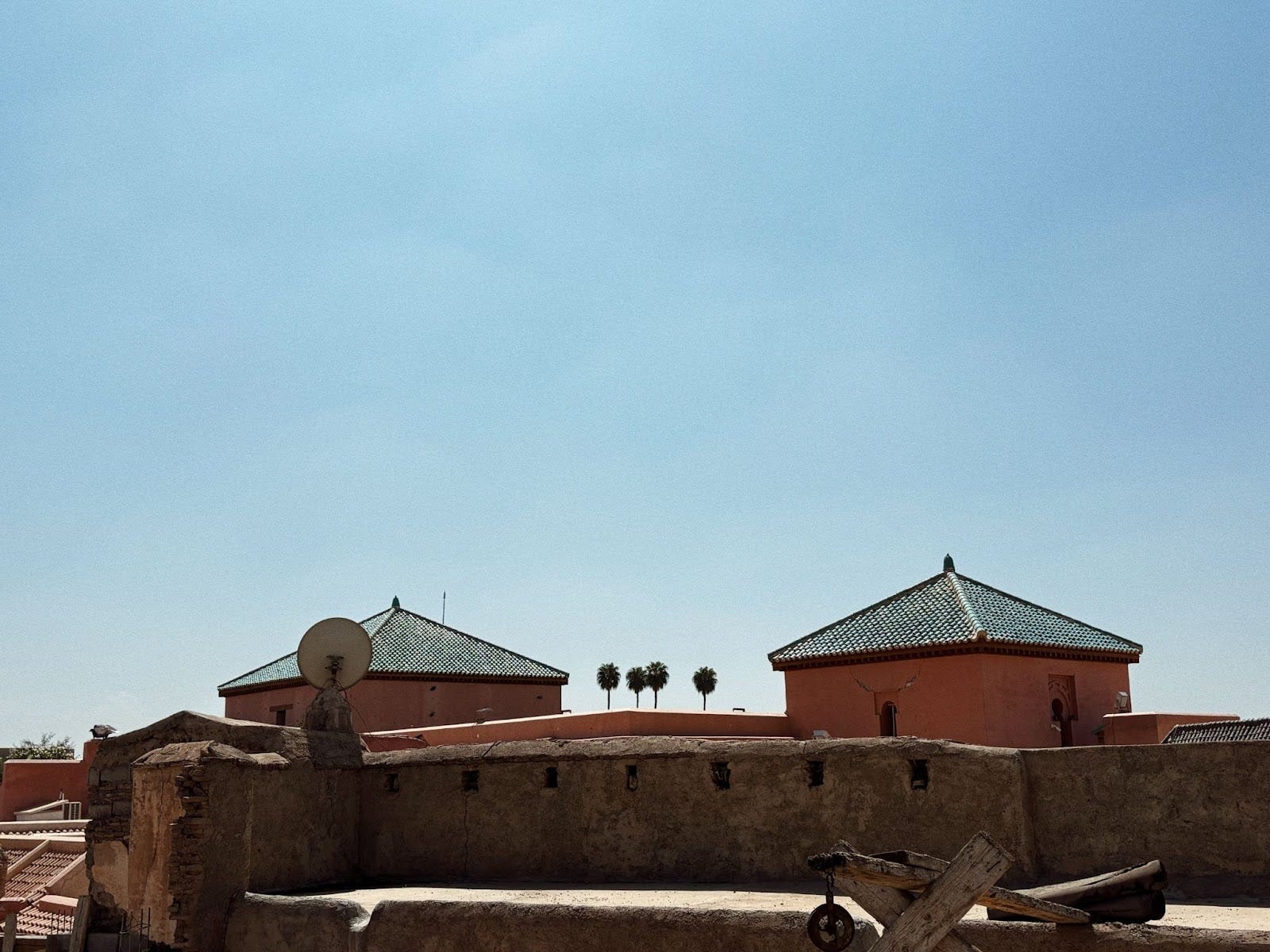
    The final night I watched the mosque glow in the distance. We stared at each other, curious about our differences but connected in our similarities. The night smelt like orange blossoms and burning amber and I imagined myself running across the terracotta roofs, I would sit in the palm trees as the city rippled below me. Each moment, real or not, was a pilgrimage unto myself. Identity is a soft cage when you see yourself in relation to the world around you.

    Words by Emma Sun @emsun7s7

  • Light That Lasts: Amsterdam, a Living Archive

    Light That Lasts: Amsterdam, a Living Archive

    On a canal boat, wedged between my mother and a sullen french teenager, a vaguely classical tune drifted through the universal-fit earphones perched above my hoop earrings. 

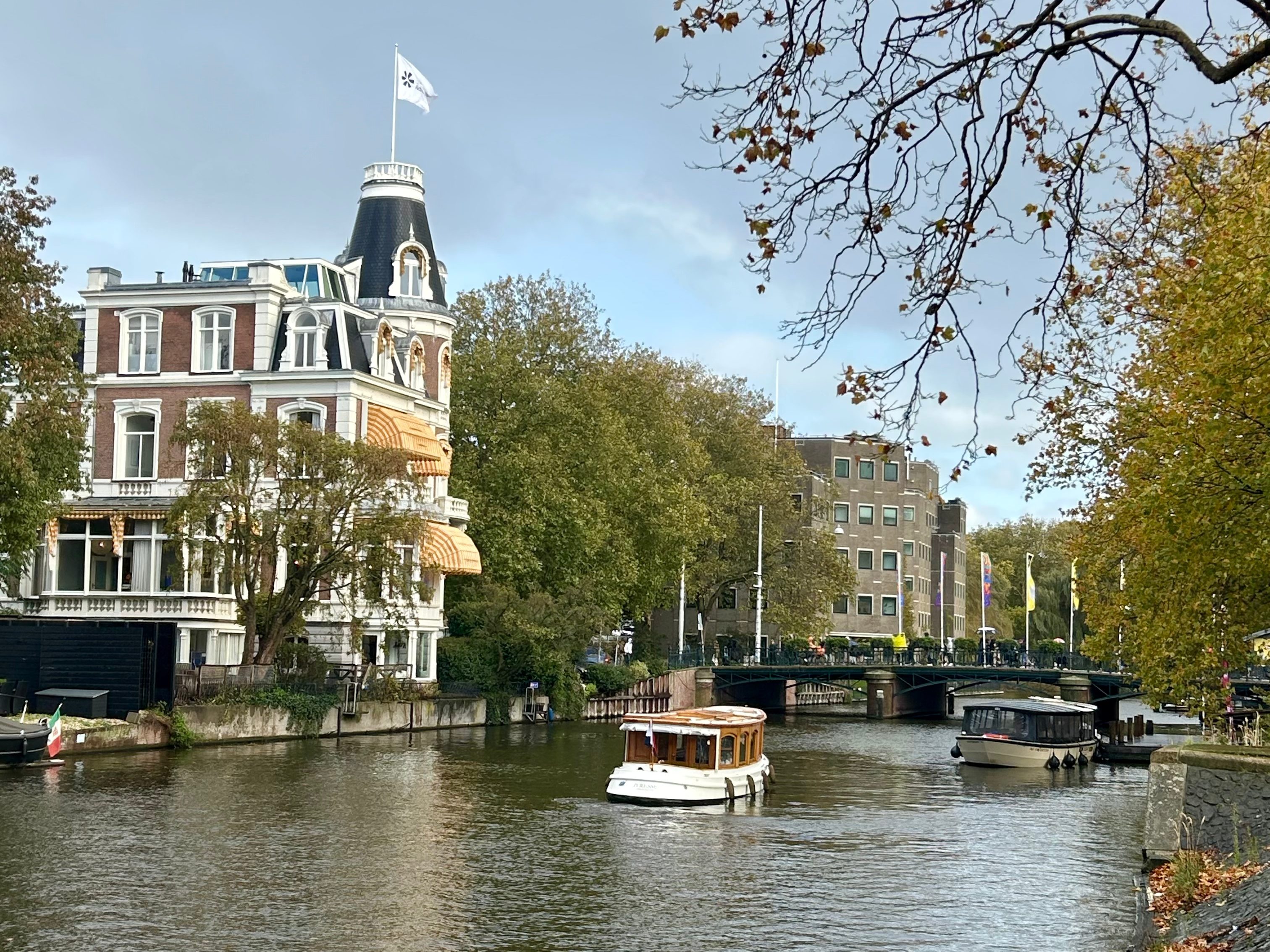
    On the right, you’ll see the Westerkerk–that is, the Western Church. This is where Rembrandt van Rijn was buried in an unmarked grave. His remains were later exhumed and moved, as was the norm for the poor at the time of his death in 1669. 

    Today, you can pay your respects for the renowned painter at the commemorative stone on the north wall of the Westerkerk, or even at the Rijksmuseum!

    In art school, Rembrandt often came up in lectures and from tutors’ lips. My earliest associations with the name were a paint brand, the artist’s reputation as one of the the masters of light, and an advertised course in my home city where people paid to learn how to paint like him.

    The promotional images captured dutiful students cutting out and taping up A2-sized inkjet prints of his paintings. They spent five days in a row, six hours a day, trying to capture his famed light beside them, like a devotional exercise.

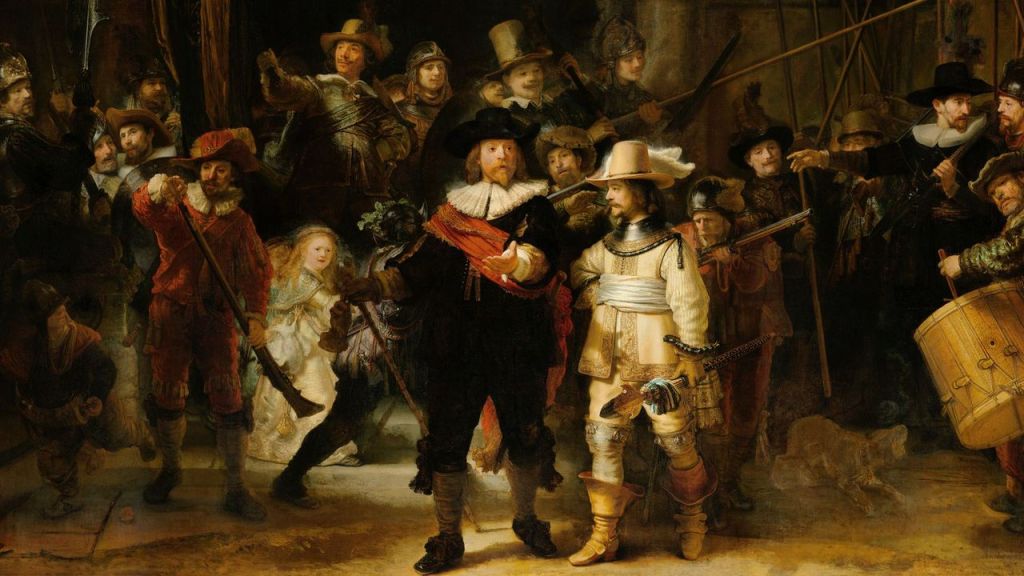
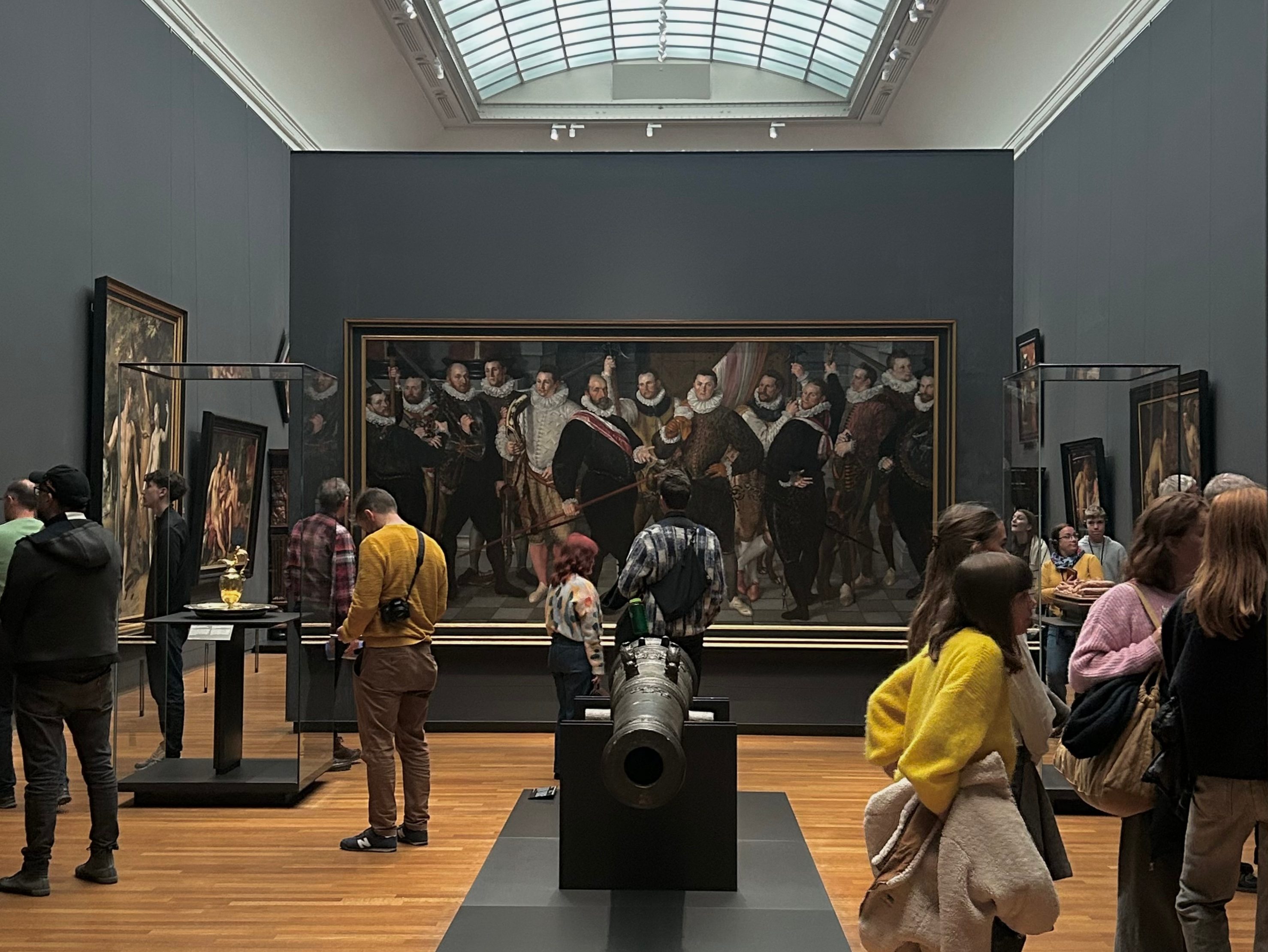
    In the Rijksmuseum, tourists huddled around a vast glass wall where The Night Watch (1642) sat, tended to by an art restorer in an elaborate contraption that carried her to the very top right-hand corner of the massive painting. We watched as she methodically stared at the laptop in her lap and then back at the canvas, and I wondered when she might start doing something more interesting–like making an irreversible black mark, or turning around and saying, Did you know that Rembrandt was buried in an unmarked grave, because he was bankrupt, poor, and his work was suddenly unfashionable?

    Rembrandt van Rijn, The Night Watch, 1642, oil on canvas, 363 cm × 437 cm, Rijksmuseum, Amsterdam.

    I will spare you the history of another Amsterdam-dwelling artist with a familiar story of incomprehensible posthumous fame, but I couldn’t help being amused by the Van Gogh plushies in the Van Gogh Museum gift shop, complete with self-inflicted, bandaged ears. I was even more intrigued by a rogue Miffy masquerading as Van Gogh, paintbrush in hand.

    The inescapable trope of the tortured, canonical, white male artist bores many. This trip had me noticing something new in the powerful ubiquity of these figures–a cultural weight that now seems to operate on the same plane as a fictional, minimal, white bunny.

    While I like to think of myself as educated in matters of fine art, there is something alluring about Miffy memorabilia, which more or less amounts to two dots and a cross. Towards the end of our visit to Amsterdam, we even made the pilgrimage to Miffy’s birthplace: Utrecht, a town only a short train ride away. In the station bookshops, her face stared back from children’s paperbacks in half a dozen languages. She beamed from umbrellas in the rain. 

    It doesn’t stop there. In Tokyo, she occupied entire store floors; in London, she dangled on a passerby’s house keys. I began to imagine my own mark, however small, threading through the world in the same way. At the risk of sounding existential, the thought of the ripples we leave behind long after our passing was the loudest refrain of my time in Amsterdam. I blame the fact that I was knee-deep in my masters, trying to understand what it might mean to make art that may last for centuries.

    After the museum, we walked through the Jordaan and drank mint tea in a narrow café that smelled faintly of sugar and damp wool. We ate cheese fondue with a basket of bread cut into too-small cubes, dipping them again and again into the same pale pool. 

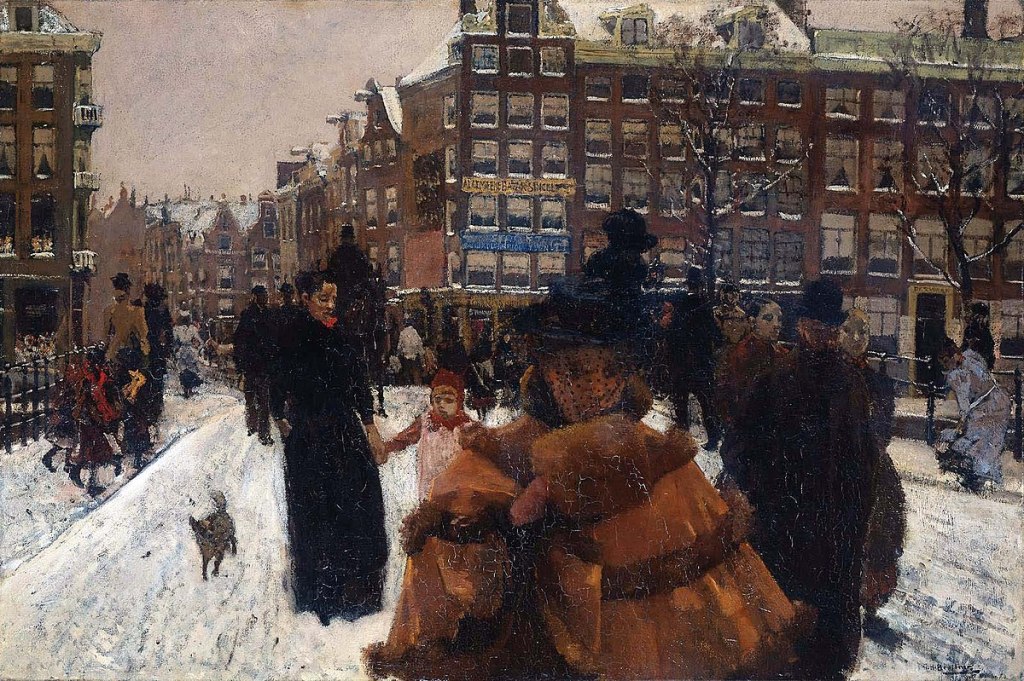
    Looking down into the narrow canal, I remembered the sterile audio guide from that morning that mentioned how Amsterdam’s canals were built in the 17th century. Almost immediately, The Singel Bridge at the Paleisstraat, Amsterdam (1898), which I had seen only an hour earlier, leapt into my mind: the timeless, anonymous figure in the foreground, the impressionist rendering of Amsterdam’s iconic narrow buildings.

    George Hendrik Breitner, The Singel Bridge at the Paleisstraat, Amsterdam (1898), oil on canvas, 41 cm × 60 cm, Private Collection.

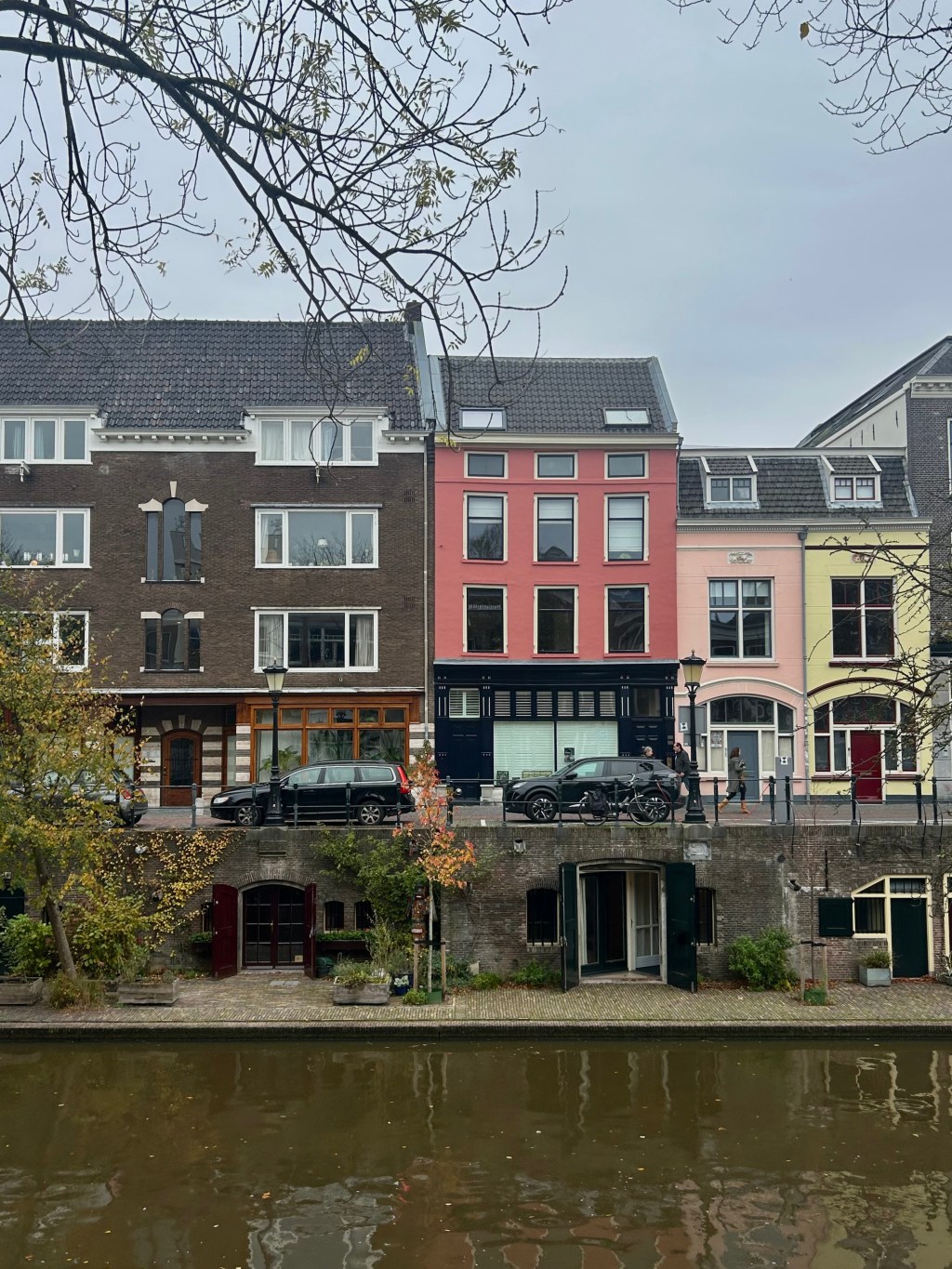
    Now the same scene sat in front of me in real time. An Amazon delivery truck whizzed past. A mother cycled by on her bakfeitsen (cargo bike), children settled in the front. A woman opened her comically narrow, tilted window to light a cigarette, dusting the ashes into the water below. Like other cities with long, layered histories, Amsterdam revealed itself as a living archive–where past and present do not replace one another, but coexist, with the promise of some form of immortality lingering in the air. 

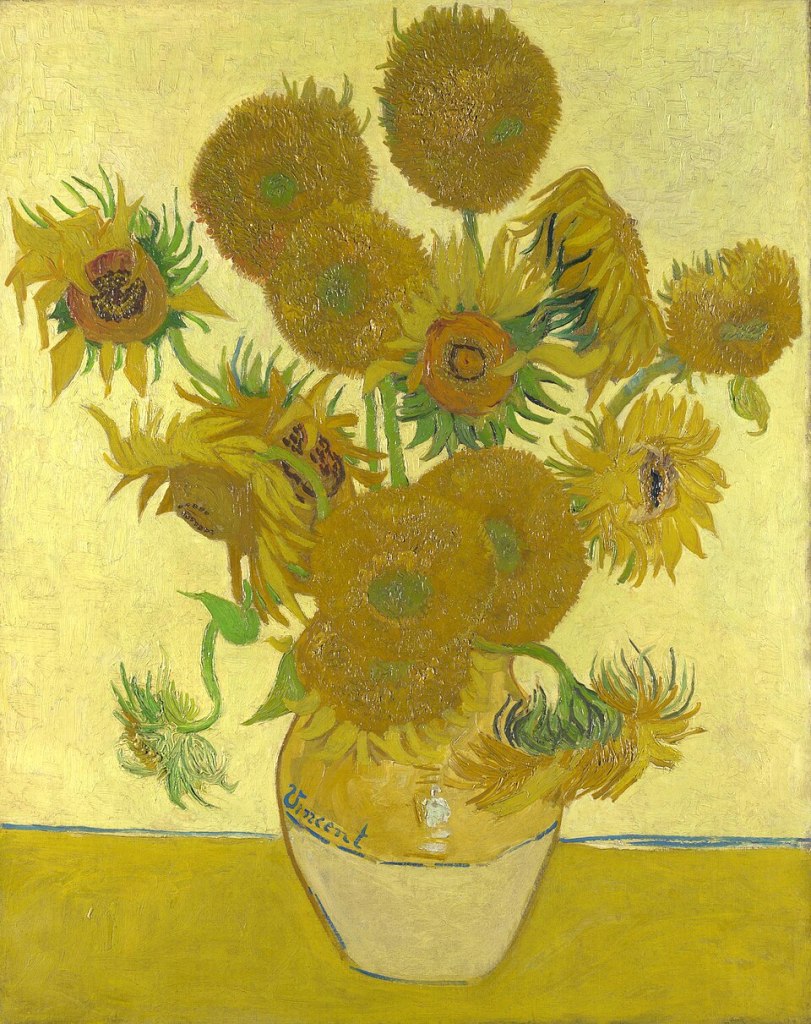
    Rembrandt’s light draped over tram lines. Renaissance-period canals accompanied cars and coffee cups printed with two dots and crosses, and Van Gogh’s Sunflowers (1888) reappeared on tote bags slung over passing shoulders. Everything endured at once, and everything kept moving.

    Vincent van Gogh, Sunflowers, 1888, oil on canvas, 92.1 cm × 73 cm, Van Gogh Museum, Amsterdam.

  • A Disquisition on Innocence: Dilara Findikoglu’s Cage of Innocence Collection

    A Disquisition on Innocence: Dilara Findikoglu’s Cage of Innocence Collection

    This article contains themes and discussion of sexual assault.

    You are thirteen years old, walking towards the creek at the end of your street.


    Small pieces of rubble from the middle of the road come loose and disperse under the tires of a passing car. The metal rims scintillate under the last afternoon light.


    The grass bubbles from the pulse of the creek bed. You take your shoes off. The crickets are singing, the stream rumbles softly, the wet ground vibrates with the hum and bustle of insects between your toes.


    In the reflections of the ripples, browns and mossy greens blur like paint stripes. A reddish leaf is pulled along by a string of currents. The leaf floats across the reflection of your cheeks, the current dragging the edges of your face.


    The ripples flash a warm yellow as the street lights flicker on behind you. Time to go home.


    Later you would come to realise that this was the last time you visited the bank of that creek, and as a result, that curious, innocent version of you would be imprisoned behind those tides irredeemably.


    We all have a version of that creek – a hidden ghost of our former selves, entrapped within the blissful ignorance of a time prior to knowing what we know now. Dilara Findikoglu’s SS26 Runway, Cage of Innocence, is an exploration of the treacherous plight back to that place.

    Emerging from a conservative upbringing, Findikoglu has
    pioneered her fashion house as a tool to deconstruct patriarchal confines, as much as a gothic dreamworld filled with visions of escapism and symbols of the occult.


    Born in Istanbul, Findikoglu moved to London at the age of nineteen to study fashion design at Central Saint Martins. Her looks became associated with outcasted crowds after she staged an unauthorised ‘guerilla’ collection to showcase her graduate thesis as well as other student collections who didn’t make the official press show. Even as Findikoglu transitioned into a mainstream designer, her fearless handling of ‘otherness’ has become a signature trait of her work:


    “In Islam, they tell you about an unknown world, the world of spirits – they’re called jinn in Arabic – and these creatures that live in other dimensions. I was scared of this world but, at the same time, felt close to it. I used to wish I was psychic so I could discover more about it.”
    (Another Man)

    Each look in Findikoglu’s runway is a disquisition on how innocence moves with us as we emerge as women. In the beginning of the show, models appear shaky and disheveled, with mud smeared up their legs and branches entangled in their wild, teased hair.

    Unkemptness and disarray transition into something much more structured as the show progresses, with hair falling smooth and tightly braided, and flowy ripped fabrics transitioning into stiff boned leather. ‘Cages’ appear in metaphorical forms – chainmail ornaments are applied directly to the face as an armour shielding the eyes and cheeks. Necklines reach high to choke its models. Latex gloves and tubed silhouettes tighten and constrict the form.

    In one look, Findikoglu gives her model a horsebit buckle headpiece. This look in particular achieves a certain ‘shock value’ – the ‘cage’ becomes so literal here it almost mimics some kind of torture device. As confronting as it is designed to be, Findikoglu never allows us to fall out of the underlying narrative, each garment flowing into the next as designs pulsate between constriction and release.

    It’s hard to express the specific and complex relationship women have with innocence, yet Findikoglu’s looks imitate it well. For young girls, childlike innocence is extremely precarious. In Australia it is estimated that females are twice as likely to have experienced child sexual abuse than males. That’s more than 1 in 3 girls who are robbed of their childhoods – the most liberating, untainted time of their lives. Those who do not fall victim to CSA are not exempt from falling victim to other predatory behaviours delivered predominately at the hands of men, throughout the rest of their lives. Think of every time you’ve been catcalled, stared at, followed, sent unwanted explicit messages. Would it be too provocative of me to assume that inside every women is a fundamental belief that she is unsafe in this world?


    The hand that so unjustly takes innocence away from young girls, is often the same that places unrealistic expectations of purity upon adult women. The concept of ‘purity’ is so deeply engrained in the metrics of what is deemed ‘attractive’, or even ‘acceptable’ within society, a ticket to extend your desirability long past your use-by date of 30. How many men’s skincare brands can you think of that make products to reduce the appearance of wrinkles by 20 years? ‘Skinny’ is back, but only for women. Is the recent Ozempic Pandemic a pursuit of appearing young and waiflike rather than managing health? Why is it that the idea of men’s body hair is innocuous, yet having a bush is a ‘political statement’?

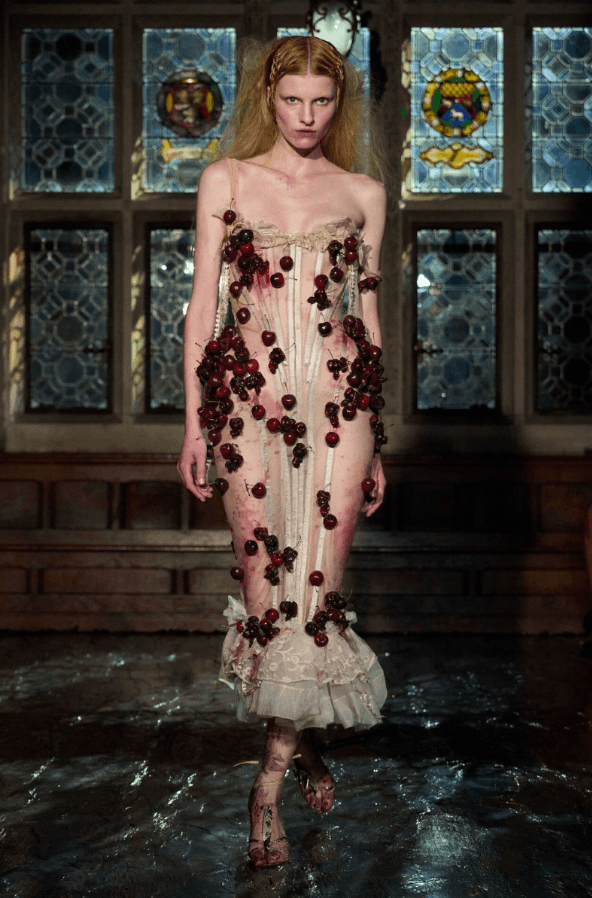
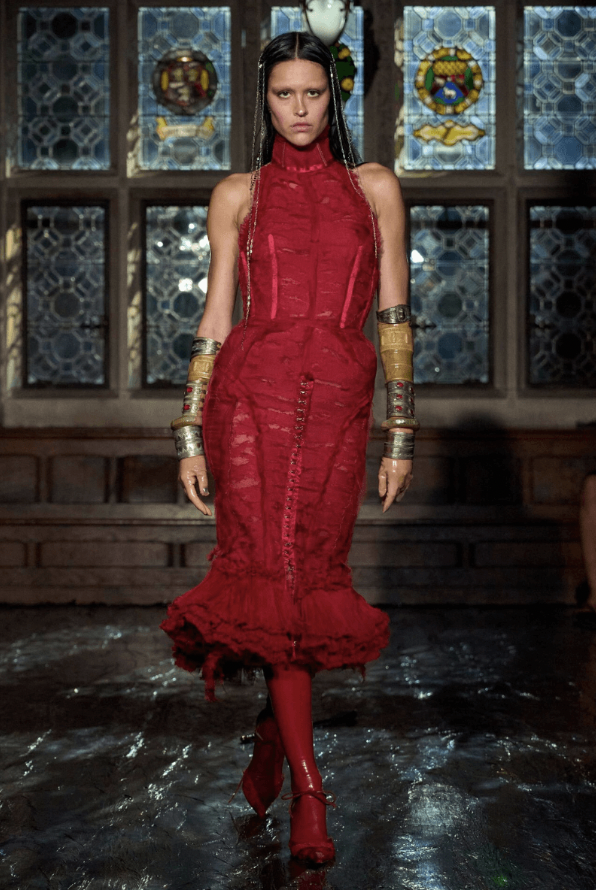
    Findikoglu’s collection explores the effect that the control of female innocence has on women’s relationships with themselves, and with each other. On the runway, she presents the idea of ‘innocence’ and the idea of the ‘cage’ within the same equal plane. The looks speak to each other – for example, the cherries used to stain a corseted ivory tube dress are echoed in another look where cherries and feathers spill out of a handbag. In the latter look, the model also wears a corseted dress, however this one appears tightly tied at her shoulders. Her hair is braided like a rope, her eyes are wide and mud is smeared across her forehead giving her a ‘hunted’ appearance. In a third monochromatic red look, the girl is ‘contained’- her extremities are bound in latex gloves and socks, her arms are cuffed to the elbows with metal bangles, and her dress conceals her body from her neck to her ankles, with metal stitching running down between the legs.

    The communication between her designs was not unintentional – in an interview with 032C Magazine, Findikoglu shares her deliberate use of red in her clothes:


    “I love the colour red because, when I was graduating, I had the sense that red was my personality. It has so many tones, and it is so difficult to get the right one. And it can mean so many things. It can mean love, passion, fearlessness. It is so bold, so out there. If you’re wearing red, it’s difficult to hide. I just want it to be heard and seen. It’s not a mid-tone. It’s red. It’s not black, and it is not white. It’s also the colour of blood—it’s quite crazy. When it’s
    diluted it becomes pink and cute.”


    Findikoglu marries red tones despite their contrasting playful and restrictive contexts. By changing the opacity of colour within a look – be it diluted cherry stains or head to toe striking red -Findikoglu builds a sense of power and reclamation. She wants both voices – the hunted girl with sticks in her hair and cherry juice across her legs, and the caged woman with a sleek silhouette and smooth straight hair, to be equally seen. In fact, both women are one and the same, just expressed differently. Findikoglu illustrates that our child self is always living inside of us- their red passion, and fearless thirst for life remains internally unbounded despite how constricted by social pressures we may
    become.


    In this runway, Findikoglu takes us back to that creek bed at the end of the street. We can feel the textures of wild nature, yet perceive it through an older, more contained lens. It’s like looking at innocence from the other side of time, from within the cage. Yet, it is in the way the garments accentuate the female form, the way that the models gaze with steadfast assurance, the walks that transition from shaky to strong, that indicates to me a certain power in femininity. Perhaps a knowledge that our innocence is sacred, and the fierceness we possessed as girls is our compass into womanhood.

    @dilariafindikoglu on Instagram.

    Words by Lola Haylock. @the.divine.archive

  • TSM’s 2025 Last Minute Gift Guide

    TSM’s 2025 Last Minute Gift Guide

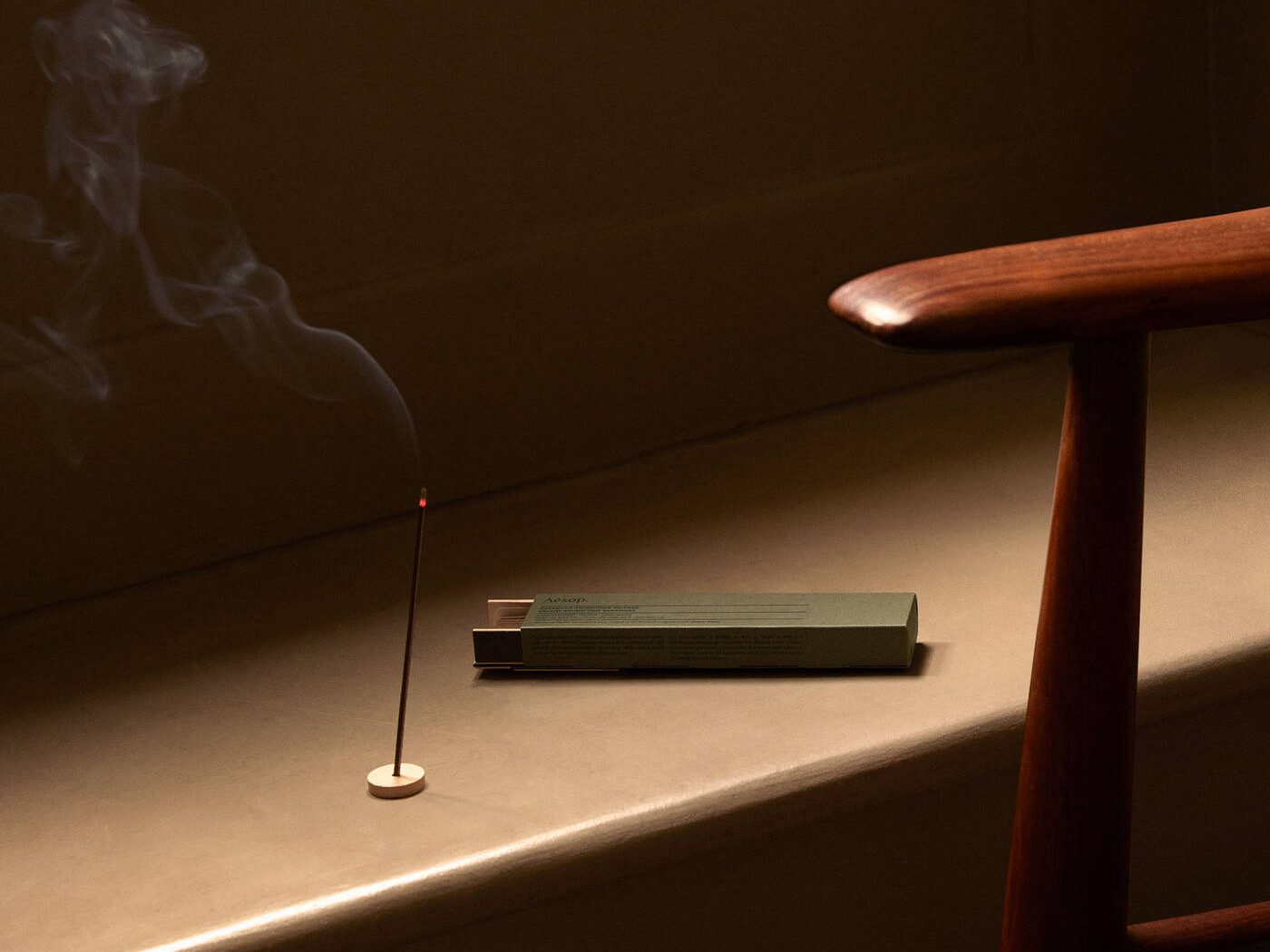
    Aesop Kagerou Aromatique Incense

    Presented in Aesop’s signature sleek packaging, the Kagerou incense releases a soft, woodsy scent anchored by vetiver, igusa, and sandalwood. Designed to subtly shift the mood of a space, each set includes a Kanuma pumice holder that naturally dissolves in water once used.

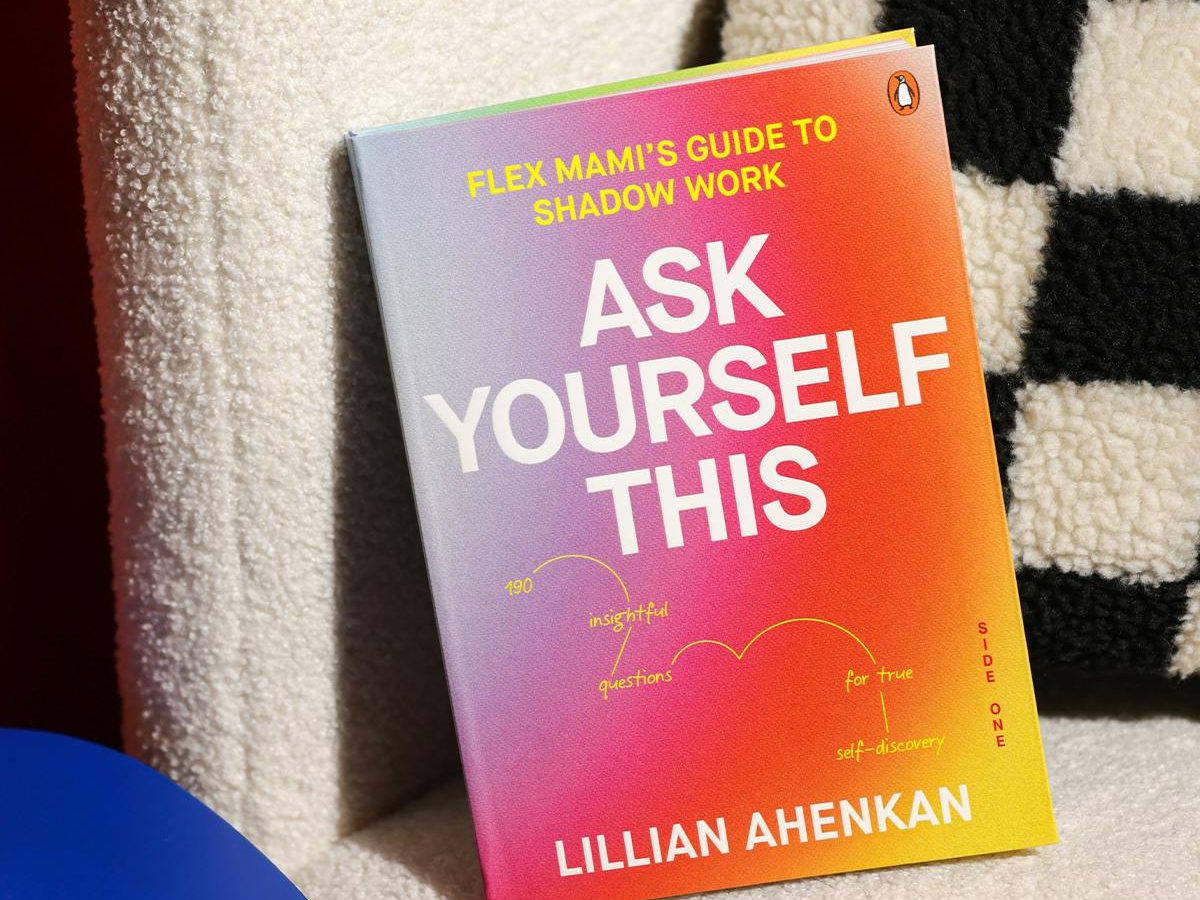
    Ask Yourself This By Lillian Ahenkan

    This guided journal features 190 thought-provoking prompts designed to encourage reflection, clarity, and self-discovery. Written in FlexMami’s unmistakable voice, it transforms inner work into an engaging and accessible daily practice.

    Cleonie Sculpture Maillot Swimsuit

    Aussie brand Cleonie’s take on the one-shouldered swimsuit is incredibly flattering and timeless. We especially love the option to request more or less coverage, depending on personal taste.

    Ela & Earth Insulated Water Bottle

    The kind of everyday bottle you end up carrying everywhere–practical, stylish, and easy to love. An added bonus is that it comes in a range of unique colourways.

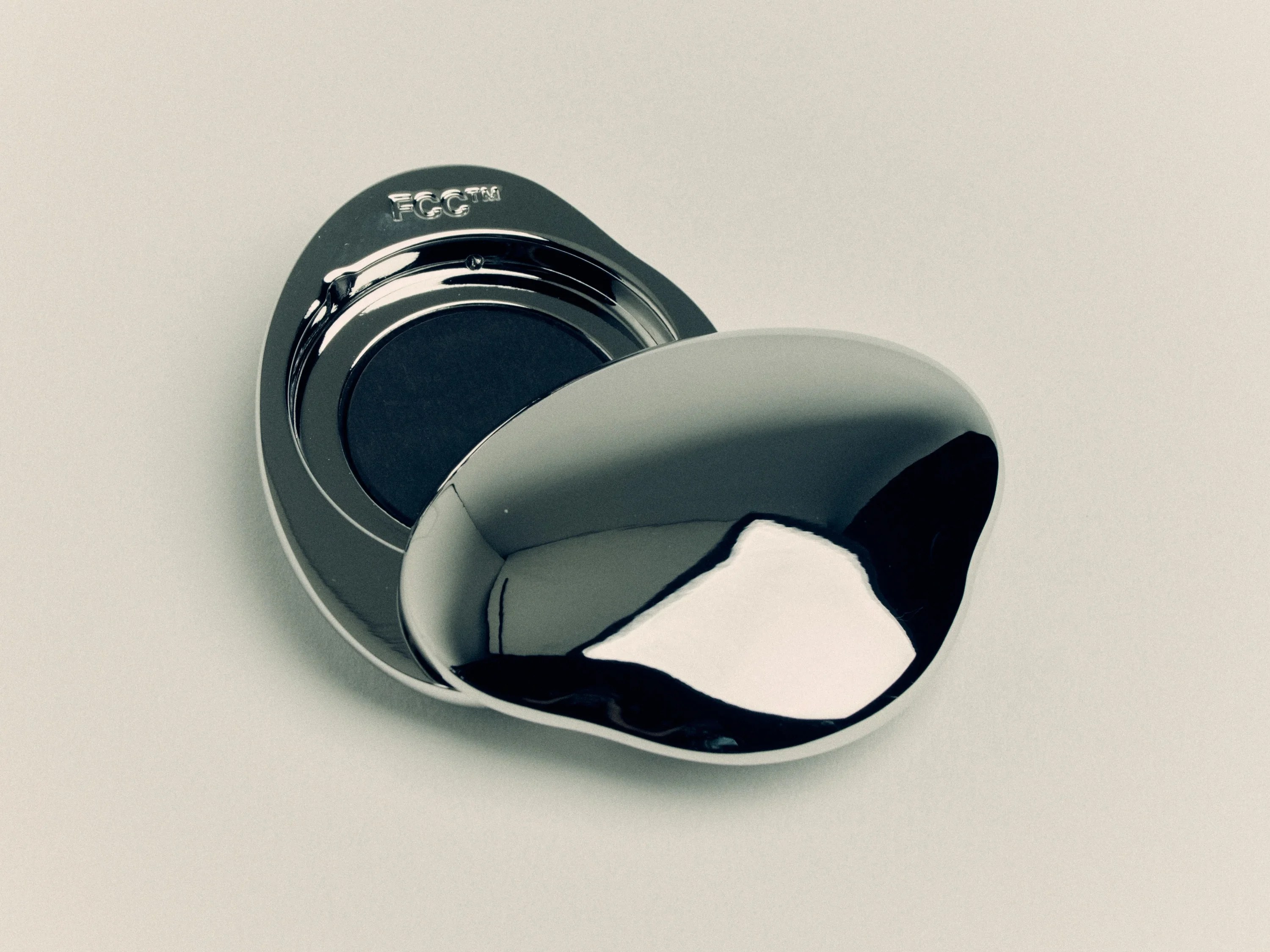
    Fluff Refillable Cream Blush

    This cream blush, in Flulff’s signature Cloud Compact, offers a natural, dewy flush in shades designed to flatter every complexion. Refillable and made with nourishing, plant-derived ingredients, it blends beautifully and can double as a subtle wash of lip colour.

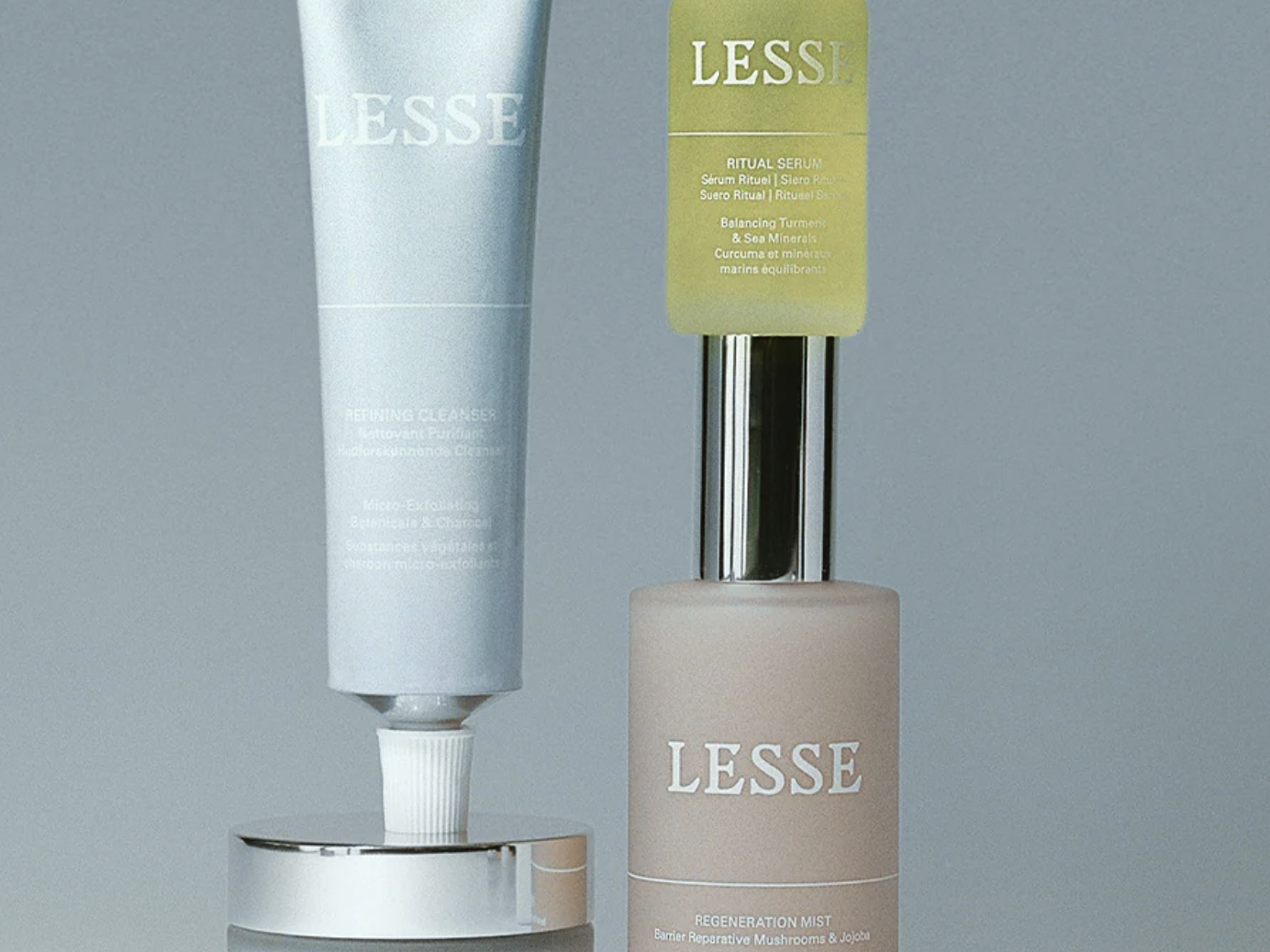
    LESSE Foundational Skincare Set

    A clean, thoughtfully considered skincare set designed to suit all skin types, featuring distinctive ingredients such as medicinal botanicals and mushrooms. The set includes a cleanser, mist, serum, and mask.

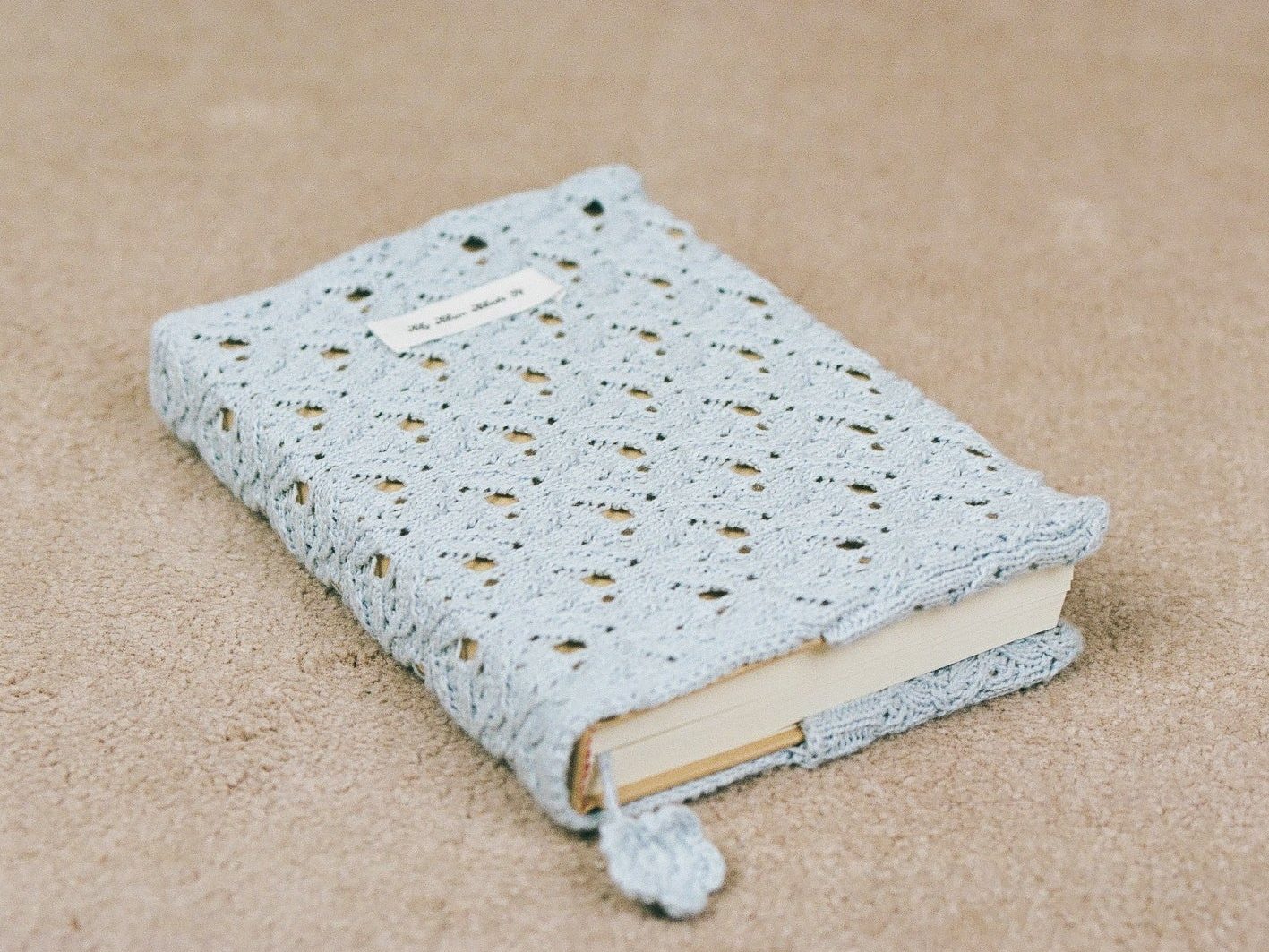
    My Mum Made It Crochet Notebook Cover

    Made from 100% organic cotton yarn, this handcrafted cover wraps a standard A5 diary in delicate crochet and includes a matching floral bookmark. Thoughtful and sentimental, it’s the perfect companion for new-year planning and reflection.

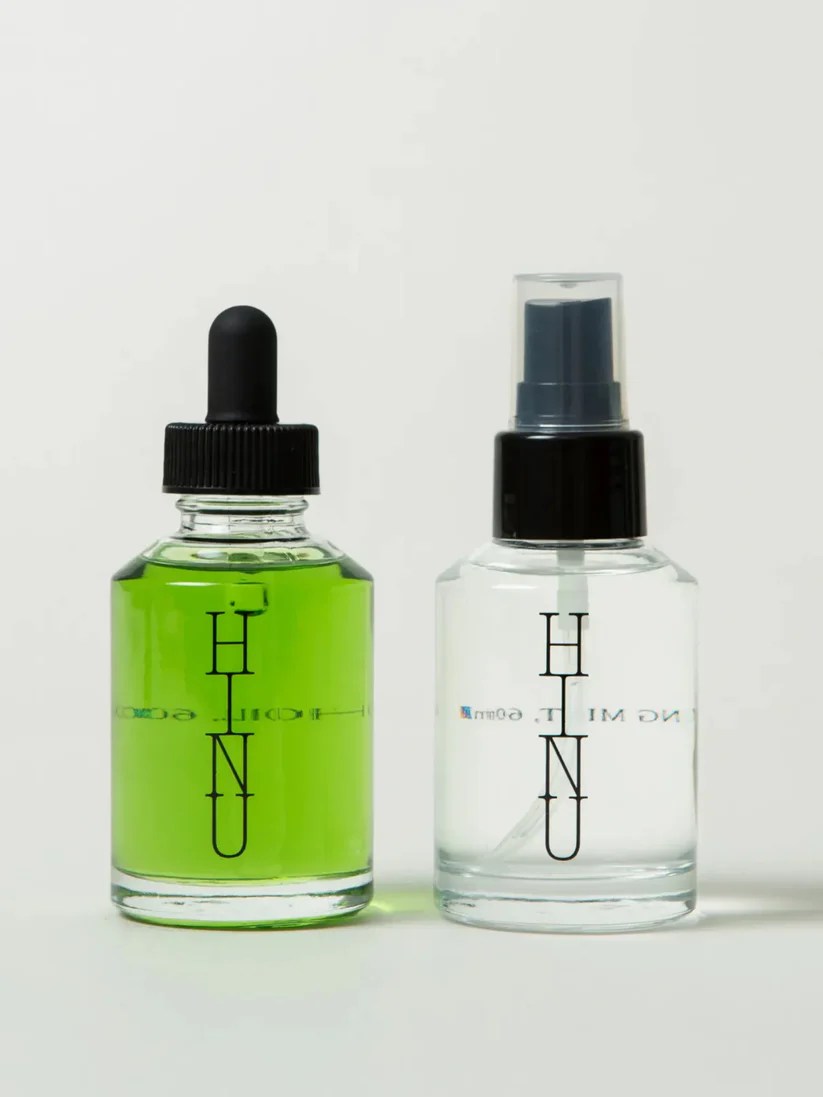
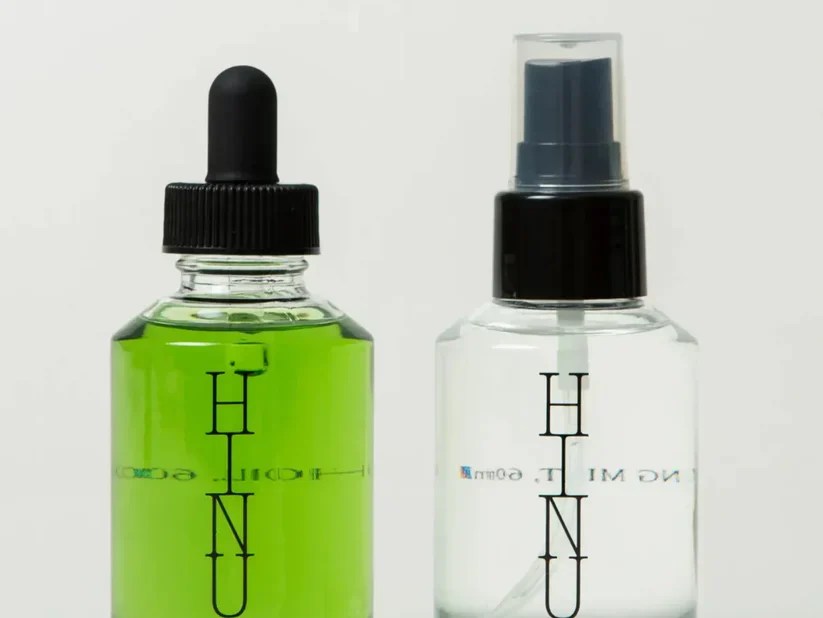
    Hinu Essential Duo

    This essential duo pairs a nourishing botanical hair growth oil with a lightweight hydrating mist. Made with high-quality, plant-derived and organic ingredients including rosemary, green tea, aloe, and argan oil, the formulas help support circulation, nourish the scalp, and leave hair softer and shinier–without the harsh chemicals.

    St. Agni 90s Belt Bag

    Everybody needs a staple, everyday bag. This nineties-inspired, minimalist design is made from 100% leather and comes in a rich, on-trend mahogany. It can be worn as a shoulder bag or a clutch.

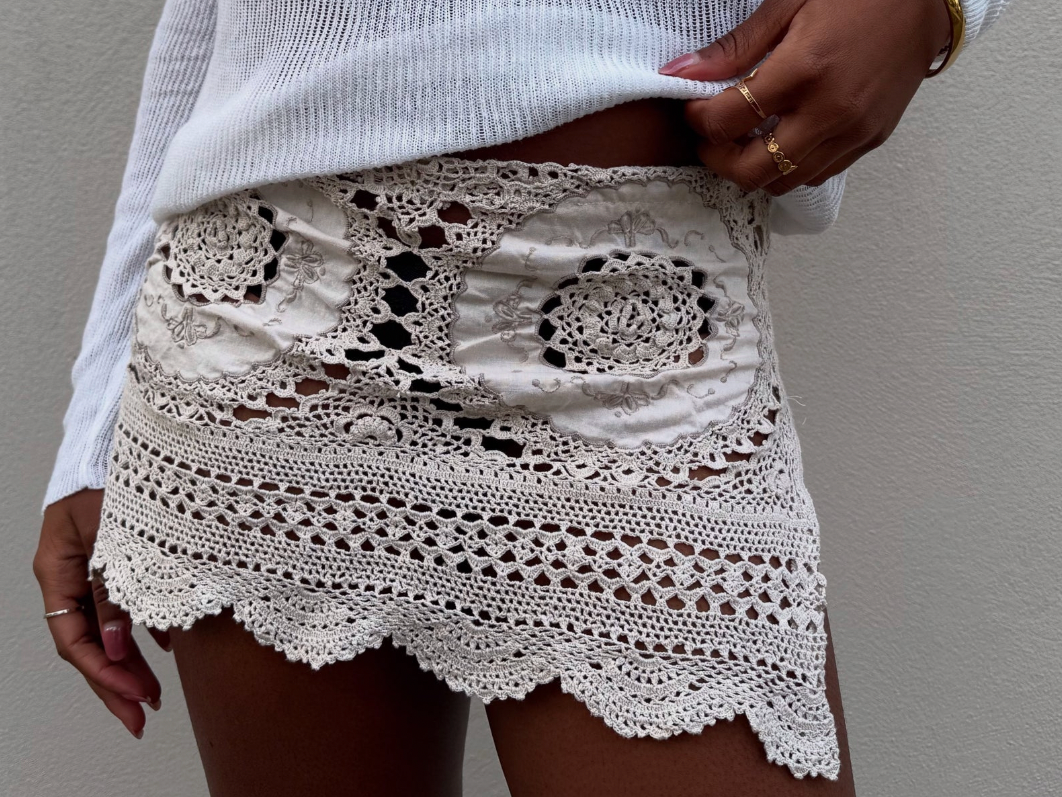
    Tehan Threads Mini Skirt 

    Melbourne-born Tehan Threads transforms deadstock and vintage fabrics into doily and lace inspired statement pieces, creating wardrobe staples that are as timeless as they are conscious. Each piece is a forever item that blends fashion with sustainability. Love your work, @alicetehan.

  • Finding My Rhythm in Barcelona 

    Finding My Rhythm in Barcelona 

    The moment I stepped out of the airport, Barcelona greeted me with a wave of warmth that felt oddly familiar. The air was thick and golden, humming with that same heavy humidity I know from Queensland summers. It clung to my skin, alive with salt and sunlight, an embrace that whispered, you’ve been here before, just in another hemisphere. 

    I arrived with my usual sense of morning purpose, the kind that likes an early start, an early finish, and the quiet order of daylight hours. But Barcelona doesn’t live by that rhythm. It moves differently. The mornings are unhurried, afternoons dissolve into languid pauses, and the nights, well, the nights belong entirely to the city. At first, I found myself fighting its tempo, bleary-eyed as dinner stretched past ten, conversations drifted lazily towards midnight and ‘early to bed’ was unthinkable. 

    At first, I fought it. My eyes stung past midnight, my internal clock protesting every late-night conversation and slow breakfast. But there’s something contagious about the rhythm of Barcelona, the unapologetic indulgence in rest, in connection, in life at its own pace. Somewhere between the second evening of tapas and my first siesta, I stopped resisting. I didn’t just adapt; I surrendered. And, somehow, it felt right. What began as a curiosity quickly became a revelation. The city wasn’t lazy, it was balanced. 

    My hotel room was modest and unassuming, in the heart of La Rambla. It was noisy, chaotic, beautiful. But my room held one extraordinary secret: a small terrace balcony that opened like a private stage over the city. When I looked straight ahead, the rooftops of Barcelona stretched in a terracotta mosaic toward the horizon: church spires and bell towers punctuating the skyline. When I looked down, La Rambla pulsed below, alive with its daily theatre of movement and sound: street performers, bustling bars and restaurants, the laughter of tourists and locals mingling in the same sunlit stream. 

    It became my favourite place in the world to sit, that little balcony. Somewhere between serenity and chaos, between being in the city and observing it. 

    What struck me most about Barcelona, though, wasn’t just its beauty or history, but its people. They are, without exception, genuine, grounded, and welcoming. Conversations came easily, smiles were unguarded, and help, in the form of restaurant recommendations or a nod of understanding, was always offered with warmth. There’s an authenticity there, a quiet pride in living well rather than merely living fast. 

    Of all the places I explored, the Picasso Museum remains my most cherished memory. Tucked within the narrow streets of El Born, it feels more like an intimate conversation with the artist than a gallery. The progression of his work, from the delicate lines of his youth to the bold experimentation of his later years, is deeply moving. Standing there,

    surrounded by the essence of a genius who once walked those same streets, I felt an unexpected stillness, a connection to the pulse of creativity that defines Barcelona itself. 

    By the time I left, I realised the city had changed me in subtle ways. What I’d found there wasn’t just a destination, it was a rhythm. A way of living that celebrates both energy and rest, both art and authenticity. I arrived a morning person, disciplined by habit; I left sun-kissed, sleep-deprived, and completely enchanted. A morning person who, for a fleeting moment, learned the joy of late nights and long, lazy afternoons. 

    Barcelona taught me that life doesn’t always need to move quickly to feel full. 

    It’s a city that doesn’t rush to impress you; it invites you to linger, to feel, and to breathe with it. And once you do, you carry its rhythm with you—long after you’ve gone.

  • The Afterlife of the School Uniform

    The Afterlife of the School Uniform

    When I think of school uniforms, I think of polyester polo shirts and creased, knife-pleated skirts, black dress shoes with scuffed toes, or socks that are permanently grey from wear. And, if I really want to get visceral with my description, the lingering smell of sweat from PE class and Victoria’s Secret Love Spell.

    In theory, the school uniform is supposed to symbolise equality and functionality. In practice, each uniform eventually becomes individual to the wearer, be it by a name scrawled on a fabric tag or the controversial choice of skirt length. The hyperreal uniform, by contrast, erases this messy, lived-in reality. It sanitises the worn, the dirty, the unfashionable, reducing the uniform to a set of recognisable elements: loafers, tartan and white blouses.

    The school uniform has become a clean slate—something that can be warped, projected onto, and eagerly leveraged by capitalism. There are both positives and negatives to this. On one hand, there’s the perpetuation of fantastical and harmful tropes about girls in uniforms that overwrite the reality of lived experiences in school. On the other, the aesthetic’s revival opens space for reinvention. For the uniform to become something new, detached from its old connotations.

    Outside the schoolyard, the uniform becomes a storytelling device in popular shows. Rory Gilmore’s (Alexis Bledel) innocence and intelligence is reflected in her modest, neatly pressed Chilton uniform. Meanwhile, the confident and fashionable Blair Waldorf (Leighton Meester) styles her uniform with loose ties, headbands, and thigh-high socks paired with heels.

    In Japanese anime, sailor-style uniforms signify youth, purity, and cuteness. Sailor Moon would not be herself without her blue-and-white sailor suit. In Ouran High School Host Club, the crisp male-style blazers parody privilege and aspiration, while the female characters in pleated skirts become symbols of both conformity and comic subversion.

    In South Korea, amusement parks like Lotte World have entire rental shops where visitors—many of them long past high school age—can hire a uniform for the day. The photoshoot is the point: giggling in blazers in a picturesque location, eating candyfloss, posing with cartoon mascots. These are all things we rarely did as actual students. School was, in reality, a full-time 9-to-3 burden, heavy with rules and growing pains.

    At risk of sounding dramatic, wearing the school uniform, and in particular the school skirt—as a real girl in real school—is a historically, politically and socially charged experience. The earliest school uniforms for boys in the 16th and 17th centuries were based on military dress. When girls were finally included in mass education, their uniforms were designed not for equality but for modesty, domesticity, and clear visual distinction from boys. The skirt was chosen to reinforce “femininity,” whatever society deems it to be.

    There’s something to be said about how successfully this idealised image of girlhood infiltrates the average woman’s wardrobe. Even I have a soft spot for tartan-patterned-anything and socks with black, shiny, Mary Janes. But perhaps there is a subtle message within all this—one that women have always been told: to never grow up. To never age.

    So what’s the alternative? Non-gendered uniforms?

    Maybe it’s not just about what we wear, but the freedom to decide—whatever that could look like. To view the uniform as something fluid, unbound by gender, age, or expectation. Designers like Sandy Liang are already doing that, turning the once-rigid silhouette into something playful, genuine and universal. That’s the best outcome of the uniform’s afterlife: a fantasy we can finally control.

  • The Greek Kafenio

    The Greek Kafenio

    Perched beneath a sea of casuarinas outside the kafenio, the old boys are onto their second or third elliniko kafe. Dressed in their weekday-uniform of plaid shirts with the top buttons undone, they’ve ditched their Lowes windbreakers for the season. Adorned now in their weathered golf caps, they relay the town’s gossip in their village tongue.

    Most of the time, they’re too engrossed in mindless conversation to notice anyone beyond their bubble. A circle of friends hanging out through time, a third space where they can meet without reservation.

    A traditional kafenio can be found in every Greek town, village, island and city. It’s not your quintessential café by any means, but rather a hub for conversation, a place to gather, and a way of life. During the waves of Italian and Greek migration to Australia in the 1960s, cafes, takeaways, and taverns quickly popped up around thriving city hotspots, providing spaces to build community and recreate a sense of home thousands of kilometres from their roots.

    For the diaspora, the kafenio acts as a parallel homeland, primarily serving older generations while preserving language, traditions, and cultural memory. It provides a space where stories from Greece are kept alive, creating continuity for those far from home.

    While gatherings of older generations at a café aren’t unique to Greek culture—these customs of unstructured togetherness are evaporating at a rapid rate.

    In big cities around Australia, the space between the personal and the public feels thinner. Beyond Europe’s piazzas and village squares, these casual corners of community—the spaces to linger without purpose—are becoming harder to find.

    There’s always a murmuring of ‘where to next,’ or the night abruptly ending just as it begins. At times, it feels as though connection has become transactional, a checklist item, rather than intentional: something that lies at the very core of our human nature. After all, most of our best memories, or even our misfortunes, unfold in the spaces between life’s scheduled moments.

    Greek kafenio culture, to me, stands as one of the last strong effigies of the 1960s migration—a living relic of what was once a hub for building community abroad. Within these spaces, motifs of my childhood form a blanket of comfort whenever I find myself passing through these suburbs, still untouched by gentrification, with a patriotism so palpable it could be served on a plate: evil eye shrines, iconography with scripture of orthodoxy, sepia-toned portraits of Greek football teams.

    In an age where such microcosms are vanishing, the kafenio remains both a sanctuary and a testament to a diaspora’s enduring spirit.

    And yet, for all this utopic vision of community, the practice is dissolving as younger generations rarely take these seats. Our “third spaces” are mostly wellness centres and online platforms. The suburban kafenio, once the heart of Greek life, now survives mostly with its creators: Australia’s first Mediterranean migrants.

    As these spaces dwindle, I find myself reflecting on what it means to lose cultural memory to assimilation. I suppose the fading of these spaces—especially those tied to my cultural heritage—leaves me longing for a side of my Greek-Australian identity that feels distant, almost dreamlike, and perhaps like it never fully existed. I find myself escaping into memories of golden afternoons of big backyard BBQs, cards at my grandfather’s roundtable and wine shared with neighbours over the backyard fence. These intimate, unstructured gatherings were the heart and soul of the community and without them, I feel as though I’m clawing onto the last crumbs of my identity by yearning for the nostalgias of my childhood. (A yearning that, I fear, has hardened into a defining trait of my personality lol.)

    I often take pride in my rich cultural heritage, in how my family remains deeply rooted in Greek traditions—something that feels completely natural to me, but which others might see as unfamiliar or unique. Of course, I am first and foremost an Australian woman. But my connections to the motherland often pull my allegiances into two.

    It’s bittersweet to think that one day this generation will fade, and with it, perhaps the lived nuances of this dual connection to Greece and home. Yet the memories endure, and perhaps it is now up to me to pass them on.

  • Why Gingham is Forever

    Why Gingham is Forever

    My first well-loved gingham piece was a pair of pants I bought from Japan when I was nineteen–just when I was coming into my true sense of style. They were interesting enough to be bold, but understated enough to be everyday-chic. I can safely say they were on rotation in my wardrobe for a generous amount of years, before they were surrendered to the Depop overlords.

    As I write this, I can feel the gingham itch again. It’s almost like every time summer rolls around in the Northern Hemisphere, the call of the pattern comes back to me. And I’m not alone–searches for gingham skirts have spiked by 350% this year, proving that the pattern’s influence remains strong. The check is everywhere again: in flirty two-pieces (see Sabrina Carpenter’s ‘Manchild’ release fit), smocked mini-dresses, and retro revival one-piece swimsuits.

    Florals fade for me. Stripes tire. Leopard is fun for a second. Gingham, however, just endures.

    The reason for that might lie in its history. Even though it’s now closely associated with picnic blankets, prairie dresses, or even a Muji bedspread, gingham didn’t start there. Its origins trace back to Southeast Asia—India and Indonesia—where early versions of the fabric were woven in vibrant colours and rhythmic patterns before they were colonialised adapted by European traders.

    By the mid‑18th century, gingham was mass-produced, becoming a staple for everything from school uniforms to tablecloths, thanks to its durability, breathability, and low maintenance. And honestly, that utility is part of the charm. It doesn’t wrinkle easily, it hides stains, and it suits just about everyone.

    As trends evolve, gingham seems to do the same. In the 1950s, pastel gingham reigned in a-line dresses and full skirts, undoubtedly boosted by Judy Garland’s baby-blue pinafore in The Wizard of Oz. In the ’90s, black gingham took a darker turn and slipped easily into the grunge scene. Today, it lives happily within our endless appetite for soft nostalgia and cottagecore escapism.

    It’s also become a kind of fashion shapeshifter. Miuccia Prada, Simone Rocha, and Jacquemus have all played with gingham in recent collections—using it to both poke fun at and pay homage to traditional femininity.

    So yes, gingham is having another moment. But then again, it never really left.