
• The Afterlife of the School Uniform

    The Afterlife of the School Uniform

    When I think of school uniforms, I think of polyester polo shirts and creased, knife-pleated skirts, black dress shoes with scuffed toes, or socks that are permanently grey from wear. And, if I really want to get visceral with my description, the lingering smell of sweat from PE class and Victoria’s Secret Love Spell.

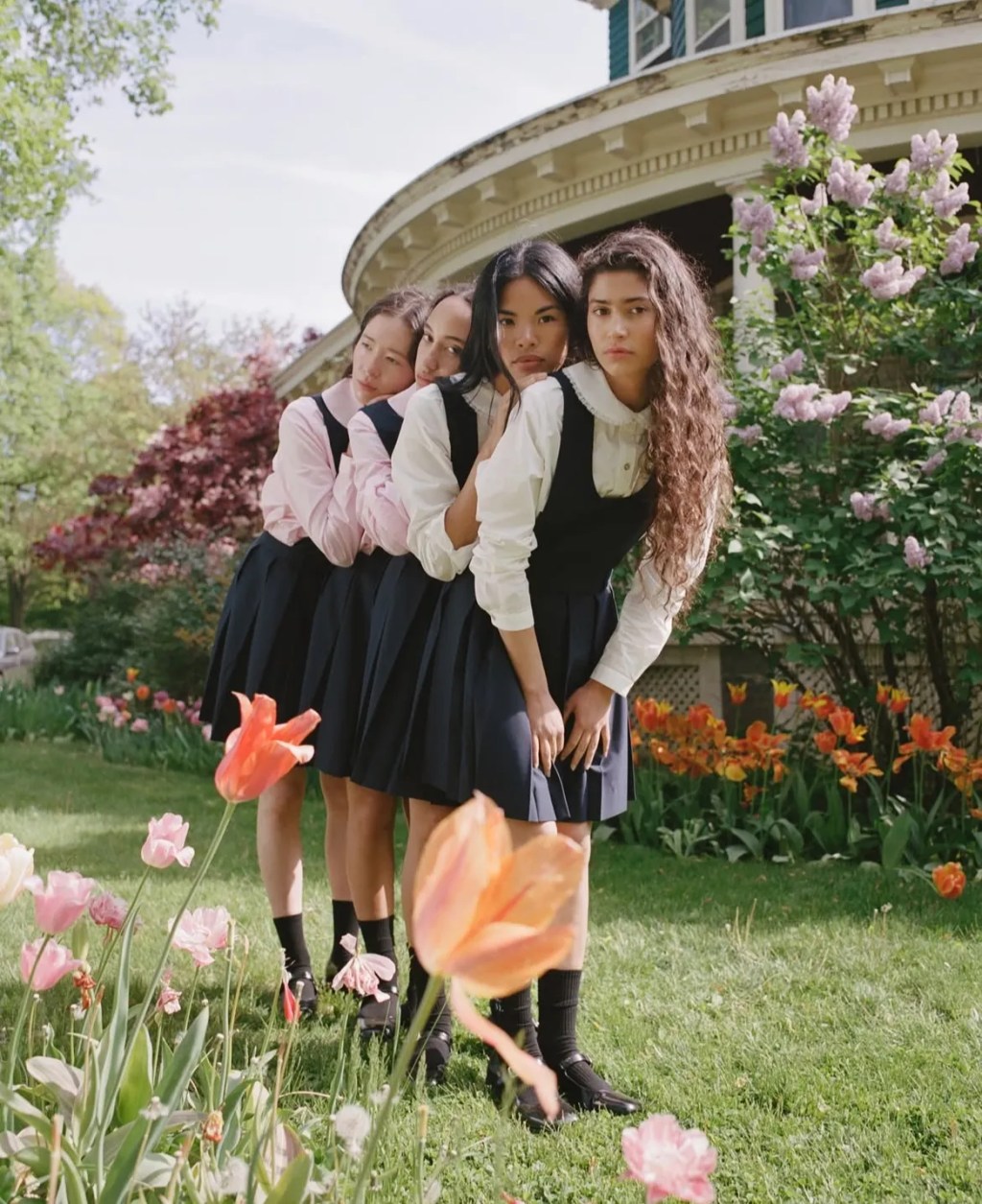
    In theory, the school uniform is supposed to symbolise equality and functionality. In practice, each uniform eventually becomes individual to the wearer, be it by a name scrawled on a fabric tag or the controversial choice of skirt length. The hyperreal uniform, by contrast, erases this messy, lived-in reality. It sanitises the worn, the dirty, the unfashionable, reducing the uniform to a set of recognisable elements: loafers, tartan and white blouses.

    The school uniform has become a clean slate—something that can be warped, projected onto, and eagerly leveraged by capitalism. There are both positives and negatives to this. On one hand, there’s the perpetuation of fantastical and harmful tropes about girls in uniforms that overwrite the reality of lived experiences in school. On the other, the aesthetic’s revival opens space for reinvention. For the uniform to become something new, detached from its old connotations.

    Outside the schoolyard, the uniform becomes a storytelling device in popular shows. Rory Gilmore’s (Alexis Bledel) innocence and intelligence is reflected in her modest, neatly pressed Chilton uniform. Meanwhile, the confident and fashionable Blair Waldorf (Leighton Meester) styles her uniform with loose ties, headbands, and thigh-high socks paired with heels.

    In Japanese anime, sailor-style uniforms signify youth, purity, and cuteness. Sailor Moon would not be herself without her blue-and-white sailor suit. In Ouran High School Host Club, the crisp male-style blazers parody privilege and aspiration, while the female characters in pleated skirts become symbols of both conformity and comic subversion.

    In South Korea, amusement parks like Lotte World have entire rental shops where visitors—many of them long past high school age—can hire a uniform for the day. The photoshoot is the point: giggling in blazers in a picturesque location, eating candyfloss, posing with cartoon mascots. These are all things we rarely did as actual students. School was, in reality, a full-time 9-to-3 burden, heavy with rules and growing pains.

    At risk of sounding dramatic, wearing the school uniform, and in particular the school skirt—as a real girl in real school—is a historically, politically and socially charged experience. The earliest school uniforms for boys in the 16th and 17th centuries were based on military dress. When girls were finally included in mass education, their uniforms were designed not for equality but for modesty, domesticity, and clear visual distinction from boys. The skirt was chosen to reinforce “femininity,” whatever society deems it to be.

    There’s something to be said about how successfully this idealised image of girlhood infiltrates the average woman’s wardrobe. Even I have a soft spot for tartan-patterned-anything and socks with black, shiny, Mary Janes. But perhaps there is a subtle message within all this—one that women have always been told: to never grow up. To never age.

    So what’s the alternative? Non-gendered uniforms?

    Maybe it’s not just about what we wear, but the freedom to decide—whatever that could look like. To view the uniform as something fluid, unbound by gender, age, or expectation. Designers like Sandy Liang are already doing that, turning the once-rigid silhouette into something playful, genuine and universal. That’s the best outcome of the uniform’s afterlife: a fantasy we can finally control.

  • Why Gingham is Forever

    Why Gingham is Forever

    My first well-loved gingham piece was a pair of pants I bought from Japan when I was nineteen–just when I was coming into my true sense of style. They were interesting enough to be bold, but understated enough to be everyday-chic. I can safely say they were on rotation in my wardrobe for a generous amount of years, before they were surrendered to the Depop overlords.

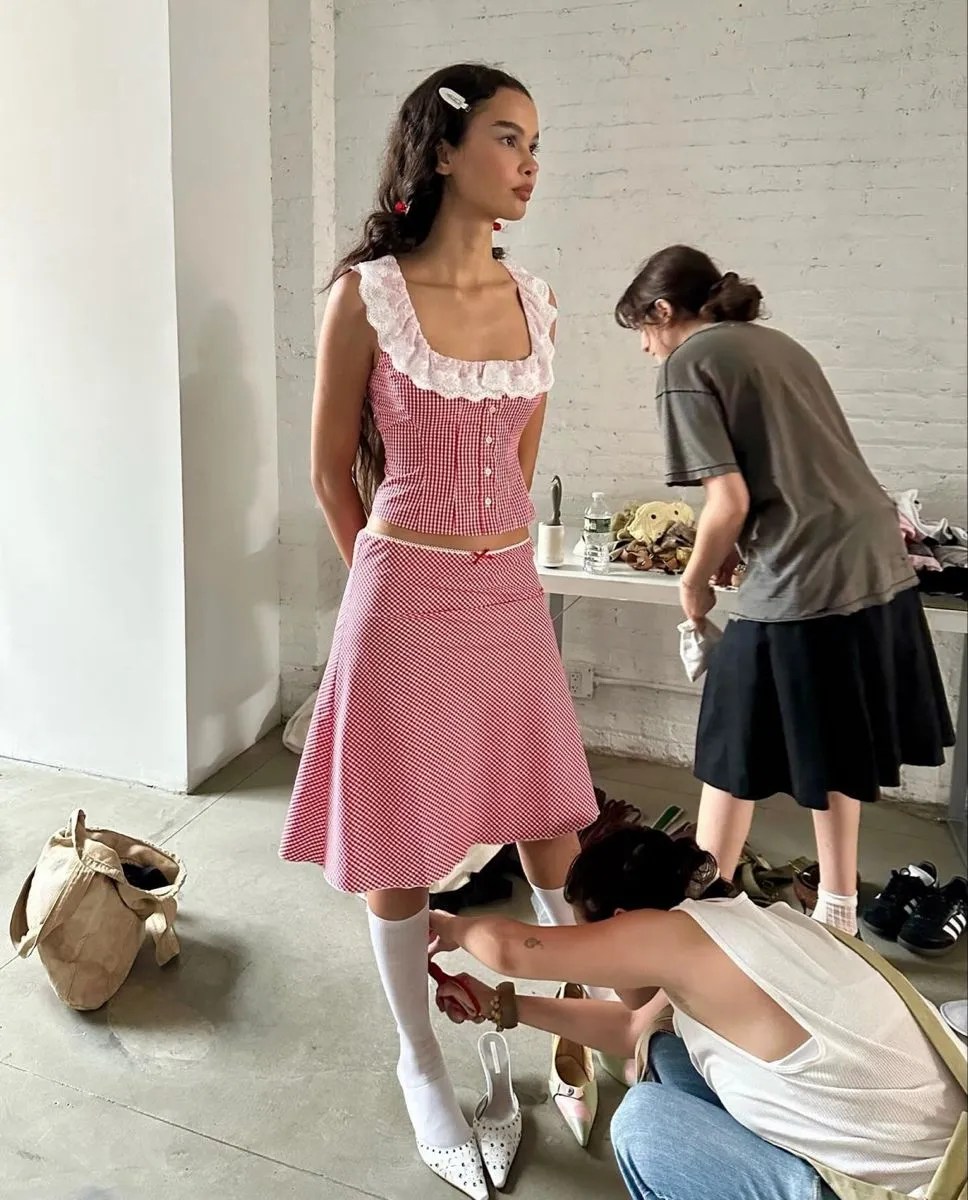
    As I write this, I can feel the gingham itch again. It’s almost like every time summer rolls around in the Northern Hemisphere, the call of the pattern comes back to me. And I’m not alone–searches for gingham skirts have spiked by 350% this year, proving that the pattern’s influence remains strong. The check is everywhere again: in flirty two-pieces (see Sabrina Carpenter’s ‘Manchild’ release fit), smocked mini-dresses, and retro revival one-piece swimsuits.

    Florals fade for me. Stripes tire. Leopard is fun for a second. Gingham, however, just endures.

    The reason for that might lie in its history. Even though it’s now closely associated with picnic blankets, prairie dresses, or even a Muji bedspread, gingham didn’t start there. Its origins trace back to Southeast Asia—India and Indonesia—where early versions of the fabric were woven in vibrant colours and rhythmic patterns before they were colonialised adapted by European traders.

    By the mid‑18th century, gingham was mass-produced, becoming a staple for everything from school uniforms to tablecloths, thanks to its durability, breathability, and low maintenance. And honestly, that utility is part of the charm. It doesn’t wrinkle easily, it hides stains, and it suits just about everyone.

    As trends evolve, gingham seems to do the same. In the 1950s, pastel gingham reigned in a-line dresses and full skirts, undoubtedly boosted by Judy Garland’s baby-blue pinafore in The Wizard of Oz. In the ’90s, black gingham took a darker turn and slipped easily into the grunge scene. Today, it lives happily within our endless appetite for soft nostalgia and cottagecore escapism.

    It’s also become a kind of fashion shapeshifter. Miuccia Prada, Simone Rocha, and Jacquemus have all played with gingham in recent collections—using it to both poke fun at and pay homage to traditional femininity.

    So yes, gingham is having another moment. But then again, it never really left.

  • Timelessness and Trend: The Wedding Dress Paradox

    Timelessness and Trend: The Wedding Dress Paradox

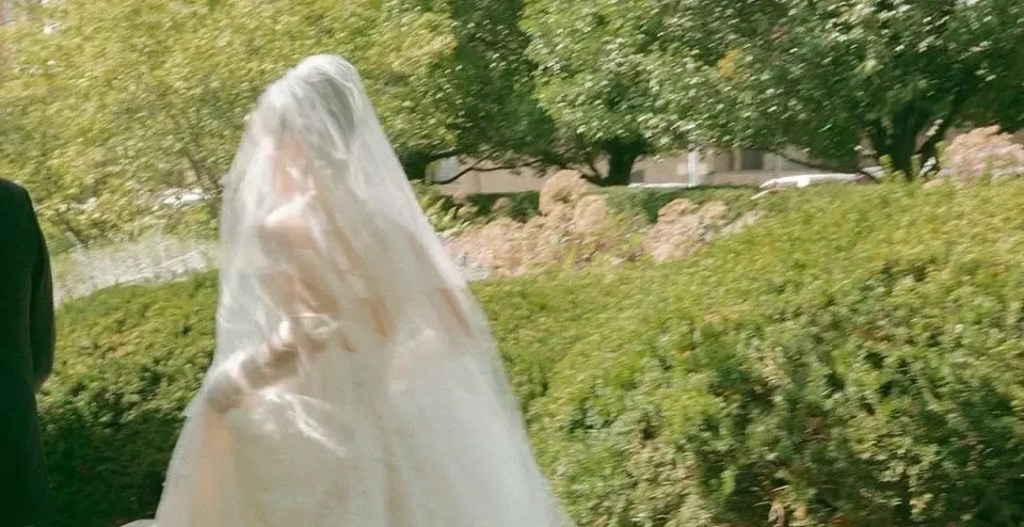
    For a garment typically worn only once, the wedding dress carries an almost unbearable amount of importance. It must be palatable but unique, classic yet contemporary–reflective of the bride’s personality without being too trendy or out-of-pocket. In trying to satisfy both personal and cultural expectations, the wedding dress becomes a paradox. A symbol of enduring tradition that is also expected to be tastefully trendy.

    At the heart of the dilemma is a question: what exactly is a wedding dress supposed to achieve? In try-on videos and Pinterest boards, the answer seems deceptively simple. It should be beautiful, memorable, and emotionally resonant. But what many modern brides seek, more than anything, is timelessness.

    This desire is complicated by our ever-shortening fashion cycles. Bridal trends move at the speed of light, and there’s an increasing pressure to find a sense of individuality within the noise–perhaps to avoid the fate of those looking back at their wedding photos from the puffy-sleeved ’80s and ’90s with regret. But timelessness itself is a fantasy, often constructed in hindsight. A dress only feels timeless if it happens to align with the aesthetics of its era and ages gracefully–by coincidence or sheer luck.

    Before Queen Victoria famously chose a white silk satin gown for her 1840 wedding, brides typically wore the best garment they already owned, regardless of colour. Her decision sparked a trend that has evolved into today’s search for the white dress. This shift paralleled the growing commodification of marriage, which popularised over-the-top weddings and crater-sized diamond rings.

    And so, ironically, what is marketed as “timeless” bridal fashion is usually a curated repetition of aristocratic aesthetics of silks, satins, lace, and corsets. These features endure not because they resist trend, but because they are the trend, recycled and rebranded with each passing season. The symbolic weight of the wedding dress, first cemented by Victoria, has since been inflated by decades of bridal marketing, Hollywood fantasies, and celebrity weddings, transforming a practical outfit into a culturally loaded costume.

    The emotional significance attached to the dress can also obscure its artificial importance. Despite the deeply personal narratives spun around finding the “right dress,” the obsession is often manufactured. As an avid watcher of Say Yes to the Dress, I can testify to the way reality TV has dramatised the process of purchasing a piece of clothing for one day of your life.

    Interestingly, the rise of sustainable, affordable weddings often comes with a rejection of the traditional dress. Alternatives like jumpsuits, coloured gowns, and vintage ensembles are gaining traction, though they remain niche. The image of a bride in a white dress still dominates the cultural imagination, no matter how contradictory or exhausting that ideal may be. Timeless? Maybe not. But telling, absolutely.

  • Dead Sea Dreaming

    Dead Sea Dreaming

    If you visit the Dead Sea during the summer, when the days are long and sticky, it’s best to dip into the water just before sunset or just after sunrise. It’s only an hour’s drive from Amman, a trip marked by a long highway lined with resorts and sun-bleached shops–each one conjuring memories of childhoods spent in the sun, the scent of plastic inflatables and sunscreen thick in the air.

    I’m used to visiting the water at dusk, just before dinner. In recent years, the make-shift beach reserved for our favourite hotel, the Kempinski Ishtar, has been enlarged, decorated with a drink stand and two brand-new outdoor showers.

    Standing at the shoreline is a meditative experience. You’ll find that the water tends to blend into the sky, creating the illusion that the sea stretches on forever. That couldn’t be further from the truth: the Dead Sea is evaporating at a rapid rate. Its exclusive salinity will soon be a thing of the past–a chapter closed forever, along with Egyptian mummification and centuries of conflict.

    If you ask, staff will source you some souvenir salt crystals, and if you’re fortunate, you’ll get a pretty one. However, there is a kind of guilt that comes with taking away from something as ephemeral as the Dead Sea.

    If you look like a tourist, someone will inevitably explain the “right” way to enjoy the sea.

    1. First, you should float in the water for five minutes. It’s no secret that the exceptionally high concentration of salt and minerals nourishes the skin.
    2. Then, dry off and apply mud to every visible inch of skin (avoiding swimwear, which the mud will permanently stain).
    3. You’ll be ready to go back into the water once the mud dries under the sun in ten minutes–pass the time by taking photos of your muddy limbs, or conversing with the medical tourist sitting next to you.

    It’s best not to spend too much time in the sea, because the salt is almost too potent, and can cause swollen legs. The water has a way of finding every vulnerability and making it sting: a paper cut you didn’t know you had, a tiny scrape barely exposing flesh.

    Anecdotally, spending time in the sea heals superficial skin issues like psoriasis and acne. I recall a woman who was often by the water, sitting on the edge of a sun lounger, with dried mud on her arthritic knees. The supposed benefits of the Dead Sea range from miraculous to modest–fifteen minutes of stillness, if nothing else.

  • Collectible Captivation

    Collectible Captivation

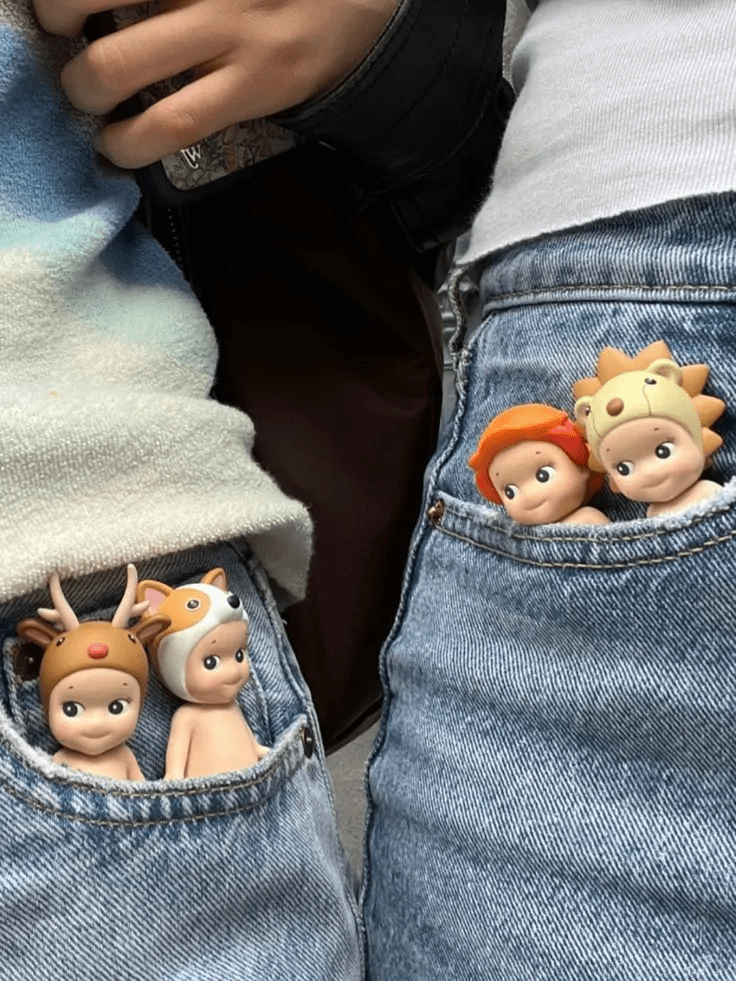
    We were fully behind the Sonny Angel trend. There’s something about a cherubic, winged baby in a fruit hat that speaks to us, as “women in their mid-20s dealing with the stresses of adulthood.” But recently, something a little more sinister has entered the purse-pal pantheon: Labubu.

    Despite an initial repulsion of their sharp teeth, their wide grins, and their stocky bodies, I strangely found myself wanting to own one too. But why? They didn’t even suit my own ballet core plum wine deer eyes old money lavender milk nails aesthetic.

    It all started with a scroll: I looked on as Sam Todd, an Australian influencer, documents her own Labubu obsession. In her TikToks, she routinely checks the Pop Mart vending machine at her gym before her regular pilates classes. Her acrylics click against the glass. Days pass, lululemon outfits change. Then—finally—a Labubu appears. She skips a pilates class to wait for the underpaid tender to restock the machine, and emerges with five Labubus under the watchful eyes of Labubu resellers and fanatics, who have already formed a queue.

    Collectible captivation is not necessarily a new phenomenon. Humans have always collected things. From decorative Neolithic tools to 1800s trading cards slipped into cigarette packs, there’s always been something addictive about the hunt. Pop Mart, the company behind Labubu, understood this perfectly. Founded in 2010, it tapped into Chinese youth culture and rebranded nostalgia with a shiny plastic finish.

    Their secret is the blind box. You don’t know what you’re getting until you open it. You wish for the cutest-looking collectible in the line-up, innocently printed on the back of the box. (Fittingly, the rarest Labubus are called “Secrets.”) You don’t get it, but there’s always next time!

    As a 2000s kid, I still remember when Kinder Surprise toys were good. There was something sacred about cracking open the egg and pulling out that tiny leaflet. It was your introduction to the broader collectible universe, plus a quiet invitation to beg your parents for another chocolate.

    But Pop Mart is different. It’s more… visceral. Everything about these blind boxes is tailored to our fried dopamine receptors. The crispness of the cardboard and the precise tab to rip it open. The satisfying crinkle of foil, and the easily digestible design of the toy inside it.

    That’s probably why I want one. It’s indulgent. It’s fun. It’s late-stage capitalism. It speaks to the ego, free of rational thought. For now, I’ll probably hold off—I have enough landfill collectibles in my room.

    I actually did end up buying one.