
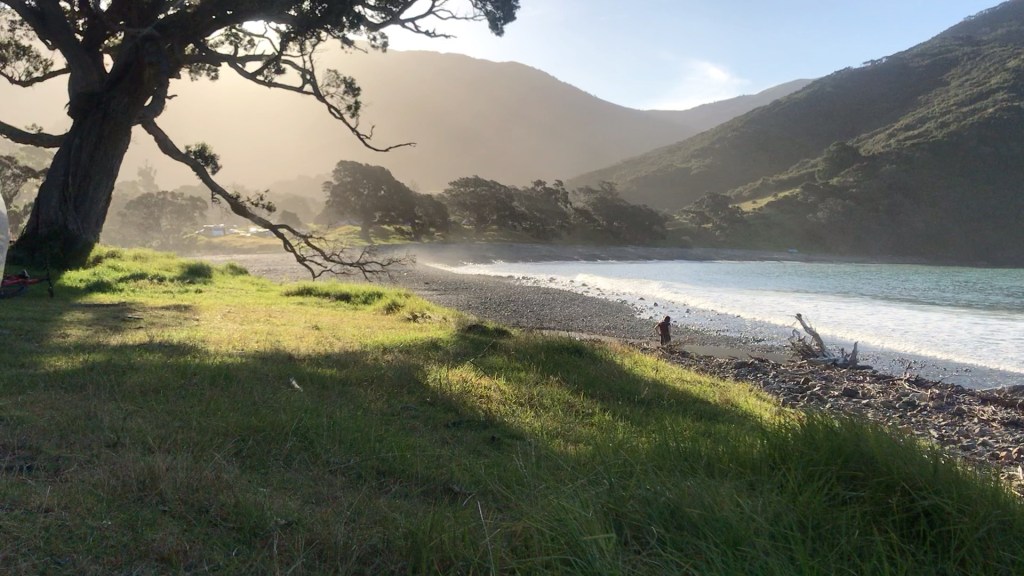
Aotearoa, land of the long white cloud, was my home over the course of the pandemic. Normally, the geographical isolation of this two-island nation would have caused me agony. But during this time, it was a god-sent blessing to be secluded from the chaos of covid.
A transient refuge from my 9-5, I found myself in Queenstown–where the wild charm of the Southern Alps meets the bougie ski resort archetype. Here, travellers congregate in clusters with brightly coloured gear, decked out in Moncler and Arc’teryx, equipped to conquer the slopes of the famous quartz-veined mountains. As someone who is not blessed with the ability to slide down snowy peaks as I hold onto measly metal poles (for dear life), I had to discover another natural wonder to purge my burnt-out soul, to temporarily forget the pitfalls of the capitalist grind.
On the tail-end of winter, the sun’s rays percolate through the atmosphere, warm enough to thaw frozen summits. Slowly, snowmelt trickles down mountain ridges, streaming through prehistoric gorges and chasms. Cascading at sea-level, pooling into freshwater rivers and lakes, bordered by pebbled shorelines. Rock faces eons old erode, snowmelt transports sparkly minerals into these heavenly bodies of water. Silver and gold flecks glitter, pools so intensely turquoise. I wonder if I ever knew the colour blue before plunging my aching body into the holy water that is Makarora River.
Worn out city-dwellers, my kindred spirits, escape to the Coromandel Peninsula every summer. Reminiscent of Australia, this coastline is renowned for its white sand beaches, endless surf and happy-go-lucky attitude. Seeking something different, we journeyed further up the peninsula. With a GPS set to reach the very tip of the Coromandel, Colville General Store was an essential stop. The last shop on the route, this old-school milk bar and service station is stocked and loaded for a zombie apocalypse.
Venturing on, the winding, and at times, one-track road steered our compact rental car. Succumbing to the dusty unsealed lanes, clouding our periphery of deep green native forest. There are off-grid wooden homesteads hidden amongst the valleys, few and far between. How do people live like this?
Maybe I should like live this.
Enchanting undulating hills intersect with backcountry bush. Awe-struck in silence, my companions and I soaked up the beauty that is the essence of Aotearoa. We sensed we were off in a faraway land, where time ceases to exist, whole-heartedly in the present moment, utterly in reverence of life itself. This feeling is the reason we travel, and it cannot be put into words: only embodied and experienced.
Jagged cliffs, untamed oceans. Kids embrace us like family. “Kia ora!”, they chirp, with sincere smiles and earnest eyes.
Kapowairua (Spirits Bay) in Northland is rich in Māori history. It feels like the end of the world. Soapy beach froth merges into overcast infinite sky; the sacredness of this site is omnipresent. It is said that spirits travel to this region as they transition from the earthly plane. Not one dared to swim too far into the suspiciously calm waters, fearing the riptides would mistake you for a wandering soul, inviting you to the underworld.
Across Australia, annual leave is reserved for budget holiday destinations, Bali, Thailand, etcetera. Or for an escape from the lacklustre winter to a Euro summer, city-hopping from Paris to Berlin.
New Zealand will always be there, they say. While I could gatekeep the ethereal lands of our next-door neighbours, they also deserve to be celebrated for more than Lord of the Rings. Being our sibling country, it makes visiting Aotearoa feel extra special and strangely akin to home.
 Third Space Magazine