• Timelessness and Trend: The Wedding Dress Paradox

    Timelessness and Trend: The Wedding Dress Paradox

    For a garment typically worn only once, the wedding dress carries an almost unbearable amount of importance. It must be palatable but unique, classic yet contemporary–reflective of the bride’s personality without being too trendy or out-of-pocket. In trying to satisfy both personal and cultural expectations, the wedding dress becomes a paradox. A symbol of enduring tradition that is also expected to be tastefully trendy.

    At the heart of the dilemma is a question: what exactly is a wedding dress supposed to achieve? In try-on videos and Pinterest boards, the answer seems deceptively simple. It should be beautiful, memorable, and emotionally resonant. But what many modern brides seek, more than anything, is timelessness.

    This desire is complicated by our ever-shortening fashion cycles. Bridal trends move at the speed of light, and there’s an increasing pressure to find a sense of individuality within the noise–perhaps to avoid the fate of those looking back at their wedding photos from the puffy-sleeved ’80s and ’90s with regret. But timelessness itself is a fantasy, often constructed in hindsight. A dress only feels timeless if it happens to align with the aesthetics of its era and ages gracefully–by coincidence or sheer luck.

    Before Queen Victoria famously chose a white silk satin gown for her 1840 wedding, brides typically wore the best garment they already owned, regardless of colour. Her decision sparked a trend that has evolved into today’s search for the white dress. This shift paralleled the growing commodification of marriage, which popularised over-the-top weddings and crater-sized diamond rings.

    And so, ironically, what is marketed as “timeless” bridal fashion is usually a curated repetition of aristocratic aesthetics of silks, satins, lace, and corsets. These features endure not because they resist trend, but because they are the trend, recycled and rebranded with each passing season. The symbolic weight of the wedding dress, first cemented by Victoria, has since been inflated by decades of bridal marketing, Hollywood fantasies, and celebrity weddings, transforming a practical outfit into a culturally loaded costume.

    The emotional significance attached to the dress can also obscure its artificial importance. Despite the deeply personal narratives spun around finding the “right dress,” the obsession is often manufactured. As an avid watcher of Say Yes to the Dress, I can testify to the way reality TV has dramatised the process of purchasing a piece of clothing for one day of your life.

    Interestingly, the rise of sustainable, affordable weddings often comes with a rejection of the traditional dress. Alternatives like jumpsuits, coloured gowns, and vintage ensembles are gaining traction, though they remain niche. The image of a bride in a white dress still dominates the cultural imagination, no matter how contradictory or exhausting that ideal may be. Timeless? Maybe not. But telling, absolutely.

  • Third Space Talks: Misbah Shaikh

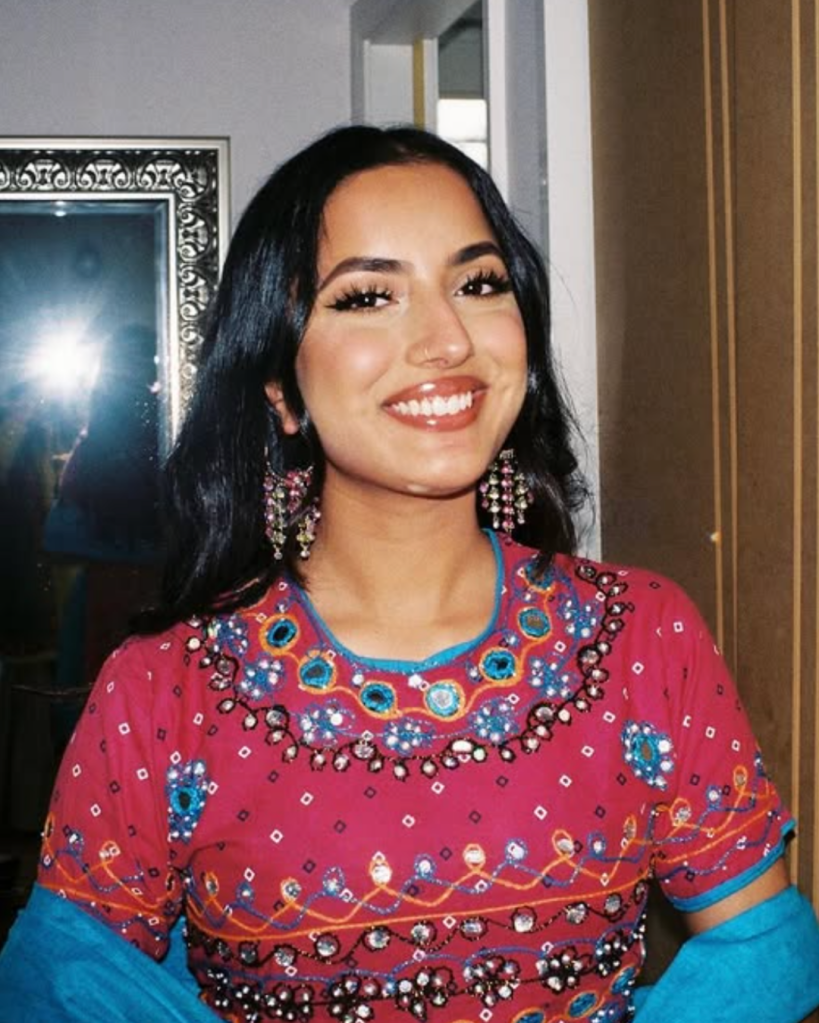
    Close friend and muse of Third Space, Misbah, shares her beauty secrets, childhood memories, and the tender reckonings that come with womanhood in your twenties.

    Tell us! How does it feel to be the debut voice for Everyday Muses?

    Hehehe I’m both nervous and honoured!

    What do you know now that you didn’t know a year ago?

    Look, it took me 26 years to get here but I’m finally learning to trust myself more.

    Where do you go—mentally, physically, or otherwise—when you need quiet?

    I picture myself back in my childhood bedroom looking out the window, watching the snow fall quietly at night with the street lights reflecting a dreamy orange glow.

    What does your “third space” look like?

    Mentally and physically I’ve found solace in prayer!

    What’s your earliest memory of watching someone you love get ready?

    I don’t know if she’ll like this answer, but my sister and I shared a room for most of our childhood, and she would draw on the thickest line of eyeliner EVERY MORNING in high school. I remember just sitting on my bed, watching her get ready.

    Is there a scent, product, or practice that makes you feel most like yourself?

    I know everyone and their mother raves about Glossier You, but it genuinely is my holy grail scent! And always, L’Oréal Telescopic Mascara.

    What’s one beauty ritual you return to when everything feels a little off?

    Doing my eyebrows always resets it for me.

    We live for your sporadic fit checks on IG. What’s the secret to building an outfit that’s both chic and practical in Sydney’s unrelenting winter?

    Layering with Uniqlo HeatTech has been a saviour! Also: chunky knits and dark denim—I feel like I’m Rory Gilmore. Sydney’s winter is all over the place, so being able to layer is essential.

    What’s one piece that’s on your current rotation at the moment?

    My oversized black coat and black knit maxi skirt are worn at least once a week! A staple in my winter wardrobe.

    How does your culture influence what you wear?

    Ah, this is such a good question! I think when I was younger, I’d shy away from my culture, but as I grew up, I began to appreciate it a lot more! Now I’d say it influences every aspect of my life, including what I wear—I love me some modest fashion, which is a lot easier to hone into with current fashion trends. Also, a dupatta is not a Scandinavian scarf!!!

  • Beginner’s Modesty: Bathing Like No One’s Watching

    Beginner’s Modesty: Bathing Like No One’s Watching

    It’s uncharacteristically chilly for the first few days of Japan’s green season. Enduring downpours feed the canopy around us and a low-hanging cloud hovers over our mountain abode.

    So much for my summer vacation.

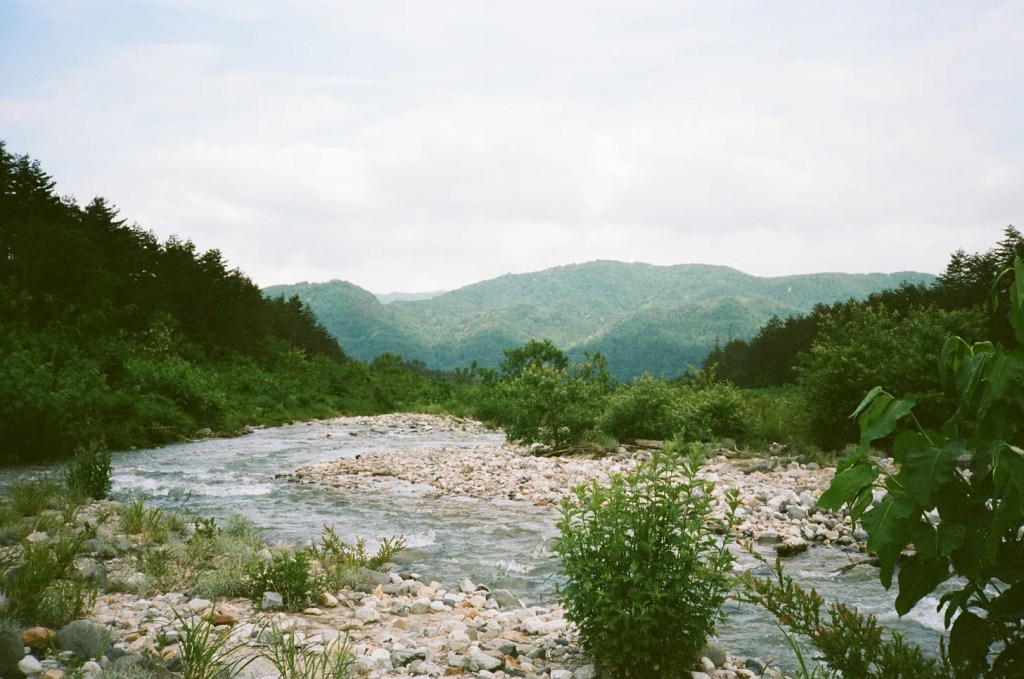
    Quickly, our days fall into a rhythm: drip-brewed coffee from a hole-in-the-wall cafe, a scenic drive to a lookout, a variation of conbini onirigi or cold soba. If the weather permits, an icy plunge into the Matsukawa River.

    And always—a visit to an onsen to close the day.

    Despite the tenacity of the rain and a very drawn-out spring, I get to enjoy the sacred baths outside of winter.

    The Japanese Alps boast some of the most idyllic hot springs I’ve ever seen—nestled into moss-covered valleys or perched on cliffside ridges with panoramic views. With full credit to my partner’s digital sleuthing and his commitment to doing things that no one else does, I’ve found myself knee-deep in some of the most beautiful, natural pools, rich in minerals of the Earth. Soaking beneath rustling leaves, with nothing but nature as company.

    We do have a local onsen we return to often. Not quite as remote, but charming nonetheless—tucked into the heart of a quaint little town in Nagano. We time our visits just before the last entry. Not entirely to avoid other humans, but mostly for the quiet luxury of having it to ourselves.

    Annoyingly, I’ve yet to fully shake what onsen regulars have come to call “beginner’s modesty.” So I’ve mastered the art of stealth—timing my entrances when the bamboo-lined change rooms are unoccupied.

    I like to think that my apprehensiveness towards nakedness is sourced from my more orthodox upbringing. But here, those inherited boundaries feel obsolete. Almost as if I’m the one out of place for clinging onto them.

    There is a desire to bask in eternal forty-degree bliss, at odds with the pervasive fear of getting my rack out in front of petite strangers. Around me, delicate silhouettes slip quietly into the space. Mine barrels in with curvaceous vengeance.

    When all is said and done, it’s foolish to assume I can get away with enjoying the baths by myself one hundred percent of the time. At some point, it starts to feel like I’m cheating the whole experience—like when gaijin wear their bathers in the water.

    Eight hundred yen is a steep price to loiter by the changeroom Asahi machine, waiting sheepishly under the neon flashing lights, anyways.

    When I do share the space though, it’s almost always with older Japanese women—composed, unbothered. After the first bare-bum barrier dissolves, it feels like no one is watching at all—or even cares to watch. It is a realisation that is uniquely humbling and freeing.

  • Dead Sea Dreaming

    Dead Sea Dreaming

    If you visit the Dead Sea during the summer, when the days are long and sticky, it’s best to dip into the water just before sunset or just after sunrise. It’s only an hour’s drive from Amman, a trip marked by a long highway lined with resorts and sun-bleached shops–each one conjuring memories of childhoods spent in the sun, the scent of plastic inflatables and sunscreen thick in the air.

    I’m used to visiting the water at dusk, just before dinner. In recent years, the make-shift beach reserved for our favourite hotel, the Kempinski Ishtar, has been enlarged, decorated with a drink stand and two brand-new outdoor showers.

    Standing at the shoreline is a meditative experience. You’ll find that the water tends to blend into the sky, creating the illusion that the sea stretches on forever. That couldn’t be further from the truth: the Dead Sea is evaporating at a rapid rate. Its exclusive salinity will soon be a thing of the past–a chapter closed forever, along with Egyptian mummification and centuries of conflict.

    If you ask, staff will source you some souvenir salt crystals, and if you’re fortunate, you’ll get a pretty one. However, there is a kind of guilt that comes with taking away from something as ephemeral as the Dead Sea.

    If you look like a tourist, someone will inevitably explain the “right” way to enjoy the sea.

    1. First, you should float in the water for five minutes. It’s no secret that the exceptionally high concentration of salt and minerals nourishes the skin.
    2. Then, dry off and apply mud to every visible inch of skin (avoiding swimwear, which the mud will permanently stain).
    3. You’ll be ready to go back into the water once the mud dries under the sun in ten minutes–pass the time by taking photos of your muddy limbs, or conversing with the medical tourist sitting next to you.

    It’s best not to spend too much time in the sea, because the salt is almost too potent, and can cause swollen legs. The water has a way of finding every vulnerability and making it sting: a paper cut you didn’t know you had, a tiny scrape barely exposing flesh.

    Anecdotally, spending time in the sea heals superficial skin issues like psoriasis and acne. I recall a woman who was often by the water, sitting on the edge of a sun lounger, with dried mud on her arthritic knees. The supposed benefits of the Dead Sea range from miraculous to modest–fifteen minutes of stillness, if nothing else.

  • Clean, non-toxic fragrances that will keep you smelling amazing—without the harmful chemicals.

    Clean, non-toxic fragrances that will keep you smelling amazing—without the harmful chemicals.

    Fragrance sits at the heart of my beauty ritual.

    My morning routine is not complete without a generous misting of my favourite scent. But what if the perfumes we’ve come to love are laced with ingredients our bodies don’t?

    As someone who’s long romanticised perfume—the realisation that many mainstream fragrances are made with synthetic fillers and hormone disruptors was a sobering one. Parabens. Phthalates. Sulfates. Words that are not made for consumption. And as the BeautyTok saying goes—your skin is your largest organ. A canvas. Why douse it in toxins when cleaner alternatives exist?

    So after years of curating what goes into my body, it felt only natural (lol) to redefine what goes on it too.

    After sleuthing through my socials and the wider web, I sat back and let the algorithm do its thing. In no time at all, I found myself blissfully scrolling through a quiet corner of the internet—a micro-community of perfumiers bound by a shared ethos: transparency, thoughtfulness, and the art of balanced composition. Here are three of my favourite clean fragrance brands that are redefining what it means to smell luxurious, without the toxic footprint.


    Recreation Beauty
    Australia’s answer to a conscious cult classic. Recreation Beauty offers luxury in a bottle, without compromising on quality. Vegan, cruelty free and ethically sourced— their scents are formulated without synthetic fillers, hormone disruptors, or questionable chemicals. Redefining decadence with integrity.

    Try: At Night We Dance
    Notes: Musk, magnolia, orange, vanilla, wood.


    Orb Oils
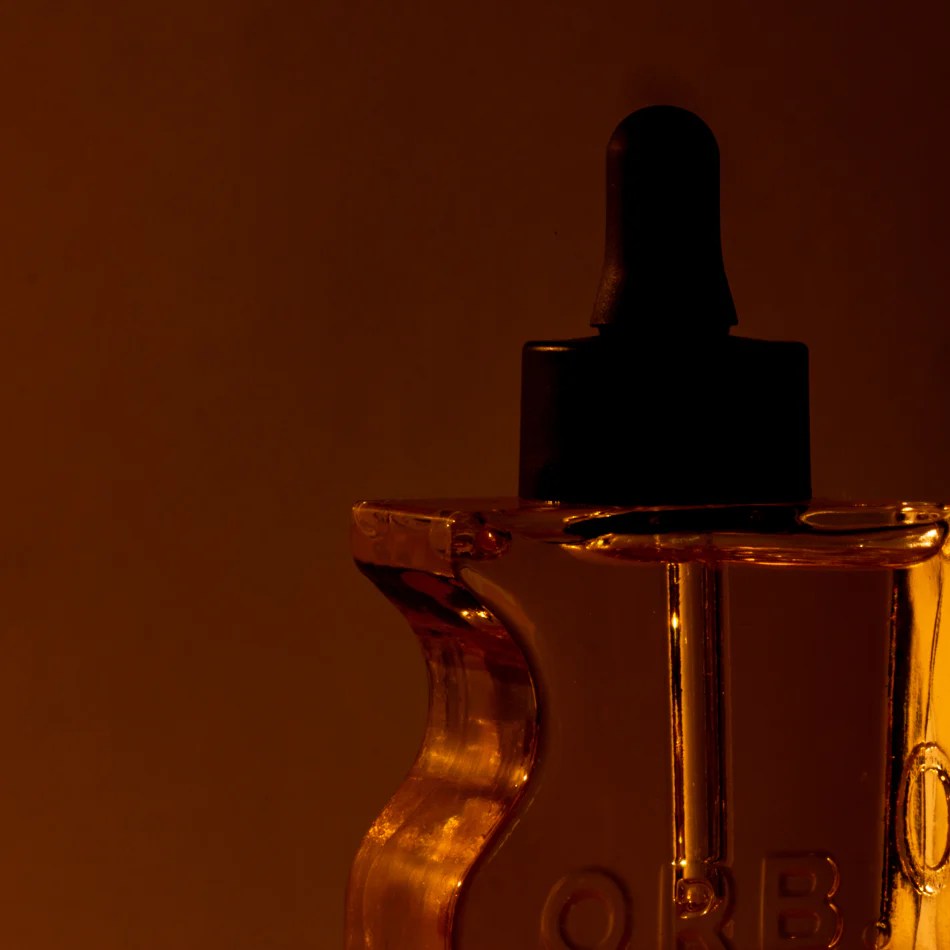
    Orb is a sensorial deep-dive—a blend of notes that conjure mood and memory. Their formulas are free from parabens, silicones, and all the usual harmful suspects. Think archival deity—rich, earthy layers blended with the finest essential oils for a scent that feels both grounded and divine.

    Try: Bobby  Fragrance Oil
    Notes: Sandalwood, spice, fresh, unisex.


    Tulita Fragrance

    Founded with the intention of setting a new benchmark for luxury, Tulita commits to formulations completely free from chemical compounds known to be carcinogenic or hormone disruptors. Their elixirs are 100% naturally derived, with over 55% organic ingredients. No parabens, no phthalates, no petroleum derivatives. Tulita Fragrance are the first of their kind—merging both fragrance and wellness into a natural elixir of vitality.

    Try: Agati
    Notes: Woody, earthy, green.

  • Collectible Captivation

    Collectible Captivation

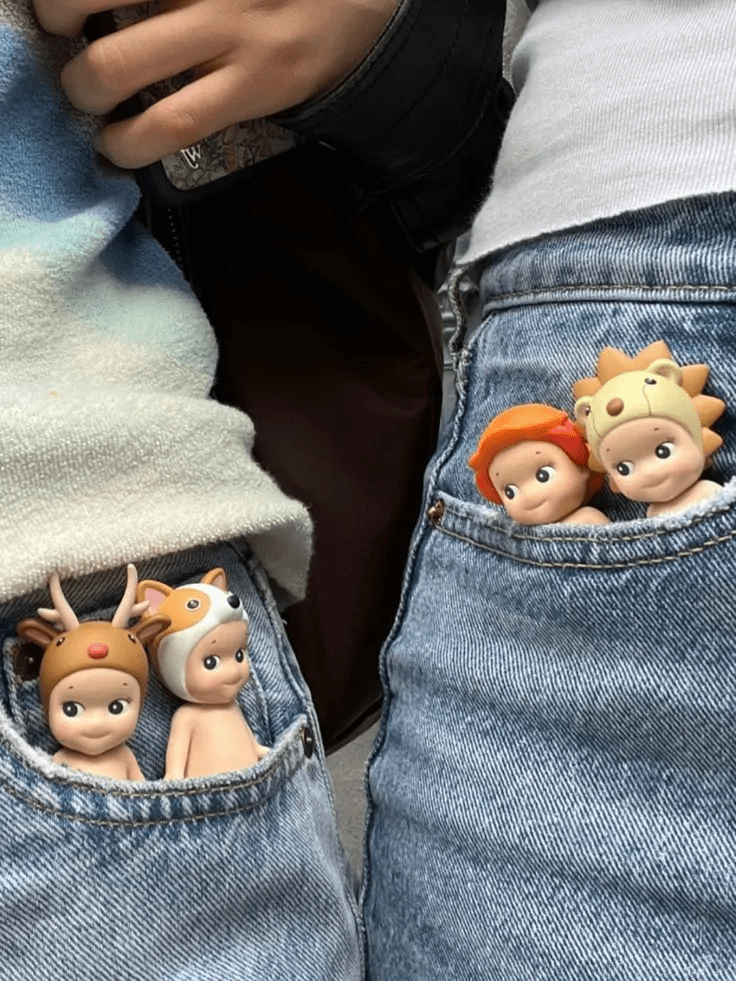
    We were fully behind the Sonny Angel trend. There’s something about a cherubic, winged baby in a fruit hat that speaks to us, as “women in their mid-20s dealing with the stresses of adulthood.” But recently, something a little more sinister has entered the purse-pal pantheon: Labubu.

    Despite an initial repulsion of their sharp teeth, their wide grins, and their stocky bodies, I strangely found myself wanting to own one too. But why? They didn’t even suit my own ballet core plum wine deer eyes old money lavender milk nails aesthetic.

    It all started with a scroll: I looked on as Sam Todd, an Australian influencer, documents her own Labubu obsession. In her TikToks, she routinely checks the Pop Mart vending machine at her gym before her regular pilates classes. Her acrylics click against the glass. Days pass, lululemon outfits change. Then—finally—a Labubu appears. She skips a pilates class to wait for the underpaid tender to restock the machine, and emerges with five Labubus under the watchful eyes of Labubu resellers and fanatics, who have already formed a queue.

    Collectible captivation is not necessarily a new phenomenon. Humans have always collected things. From decorative Neolithic tools to 1800s trading cards slipped into cigarette packs, there’s always been something addictive about the hunt. Pop Mart, the company behind Labubu, understood this perfectly. Founded in 2010, it tapped into Chinese youth culture and rebranded nostalgia with a shiny plastic finish.

    Their secret is the blind box. You don’t know what you’re getting until you open it. You wish for the cutest-looking collectible in the line-up, innocently printed on the back of the box. (Fittingly, the rarest Labubus are called “Secrets.”) You don’t get it, but there’s always next time!

    As a 2000s kid, I still remember when Kinder Surprise toys were good. There was something sacred about cracking open the egg and pulling out that tiny leaflet. It was your introduction to the broader collectible universe, plus a quiet invitation to beg your parents for another chocolate.

    But Pop Mart is different. It’s more… visceral. Everything about these blind boxes is tailored to our fried dopamine receptors. The crispness of the cardboard and the precise tab to rip it open. The satisfying crinkle of foil, and the easily digestible design of the toy inside it.

    That’s probably why I want one. It’s indulgent. It’s fun. It’s late-stage capitalism. It speaks to the ego, free of rational thought. For now, I’ll probably hold off—I have enough landfill collectibles in my room.

    I actually did end up buying one.