• Otherworldly Aotearoa

    Otherworldly Aotearoa

    Aotearoa, land of the long white cloud, was my home over the course of the pandemic. Normally, the geographical isolation of this two-island nation would have caused me agony. But during this time, it was a god-sent blessing to be secluded from the chaos of covid. 

    A transient refuge from my 9-5, I found myself in Queenstown–where the wild charm of the Southern Alps meets the bougie ski resort archetype. Here, travellers congregate in clusters with brightly coloured gear, decked out in Moncler and Arc’teryx, equipped to conquer the slopes of the famous quartz-veined mountains. As someone who is not blessed with the ability to slide down snowy peaks as I hold onto measly metal poles (for dear life), I had to discover another natural wonder to purge my burnt-out soul, to temporarily forget the pitfalls of the capitalist grind. 

    On the tail-end of winter, the sun’s rays percolate through the atmosphere, warm enough to thaw frozen summits. Slowly, snowmelt trickles down mountain ridges, streaming through prehistoric gorges and chasms. Cascading at sea-level, pooling into freshwater rivers and lakes, bordered by pebbled shorelines. Rock faces eons old erode, snowmelt transports sparkly minerals into these heavenly bodies of water. Silver and gold flecks glitter, pools so intensely turquoise. I wonder if I ever knew the colour blue before plunging my aching body into the holy water that is Makarora River. 

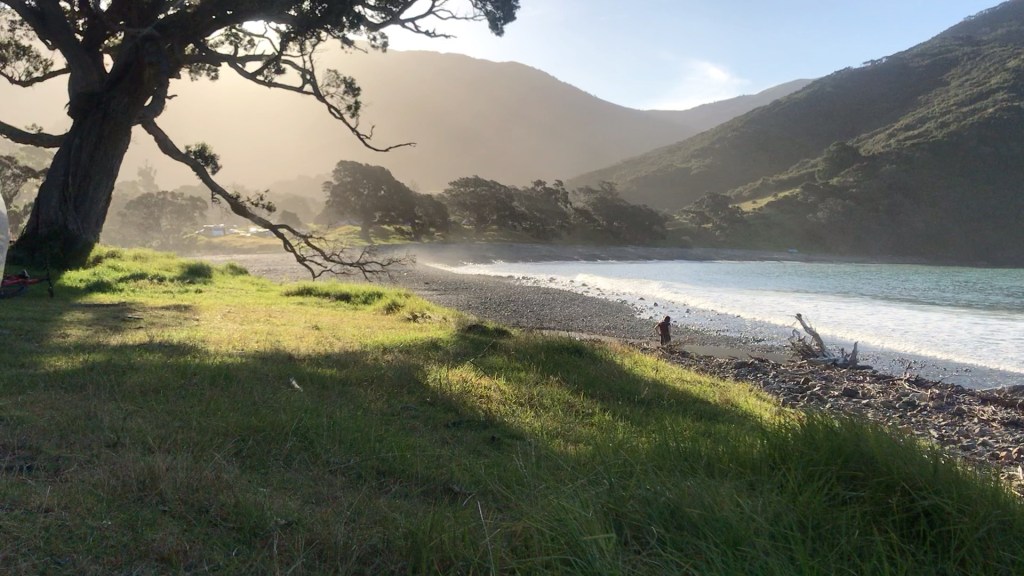
    Worn out city-dwellers, my kindred spirits, escape to the Coromandel Peninsula every summer. Reminiscent of Australia, this coastline is renowned for its white sand beaches, endless surf and happy-go-lucky attitude. Seeking something different, we journeyed further up the peninsula. With a GPS set to reach the very tip of the Coromandel, Colville General Store was an essential stop. The last shop on the route, this old-school milk bar and service station is stocked and loaded for a zombie apocalypse.

    Venturing on, the winding, and at times, one-track road steered our compact rental car. Succumbing to the dusty unsealed lanes, clouding our periphery of deep green native forest. There are off-grid wooden homesteads hidden amongst the valleys, few and far between. How do people live like this?

    Maybe I should like live this.

    Enchanting undulating hills intersect with backcountry bush. Awe-struck in silence, my companions and I soaked up the beauty that is the essence of Aotearoa. We sensed we were off in a faraway land, where time ceases to exist, whole-heartedly in the present moment, utterly in reverence of life itself. This feeling is the reason we travel, and it cannot be put into words: only embodied and experienced.

    Jagged cliffs, untamed oceans. Kids embrace us like family. “Kia ora!”, they chirp, with sincere smiles and earnest eyes.

    Kapowairua (Spirits Bay) in Northland is rich in Māori history. It feels like the end of the world. Soapy beach froth merges into overcast infinite sky; the sacredness of this site is omnipresent. It is said that spirits travel to this region as they transition from the earthly plane. Not one dared to swim too far into the suspiciously calm waters, fearing the riptides would mistake you for a wandering soul, inviting you to the underworld. 

    Across Australia, annual leave is reserved for budget holiday destinations, Bali, Thailand, etcetera. Or for an escape from the lacklustre winter to a Euro summer, city-hopping from Paris to Berlin.

    New Zealand will always be there, they say. While I could gatekeep the ethereal lands of our next-door neighbours, they also deserve to be celebrated for more than Lord of the Rings. Being our sibling country, it makes visiting Aotearoa feel extra special and strangely akin to home. 
  • Swiss-Water Decaf and Other Signs of Gentrification

    Swiss-Water Decaf and Other Signs of Gentrification

    Without giving too much away (like my personal address) it is with great neutrality that I confess that my suburb is finally getting a makeover, and that my childhood home is most likely going to double in value within the next 5 years.

    There’s no denying the steady, almost bubonic sprawl inching further west with each passing year, as more and more funding goes into gentrifying our western suburbs to accommodate a growing population.

    At university, I quickly learned that most of my friends had no real idea where I lived—geographically or otherwise. Anything beyond the northern side of the bridge might as well have been regional.

    Maybe it was the internalised insecurity of growing up in a no-name suburb. Maybe it was the stigma of living somewhere that felt cryogenically frozen in 2002. Or maybe it was simpler than that. Maybe it was all my friends’ proximity to the coast, and my forty-five minute commute to a body of water, that really solidified our socioeconomic status on opposite sides of the spectrum. 

    But it’s 2026 now, and the living crisis in Sydney is at an all-time high. This means, for the first time in history, my suburb has been declared desirable by enigmatic TikTok real estate agents.  

    At a new coffee spot just minutes away from me—a converted warehouse, naturally— I sipped from my $10 cold brew, perusing the cafe’s Google reviews until the critique of a local foodie piqued my attention. 

    {Redacted} is the beginning of the end for this suburb: a sign that the creep of gentrification has truly reached its door.

    Try living next door to two high-rise apartment blocks, I thought.

    I kept scanning the familiar letters of my suburb’s name, in disbelief that anything remotely trendy could be synonymous with it.

    For as long as I can remember, the main promenade of my suburb could be compared to the likes of a vibrant international strip––growers and sellers spilling onto the road, crates stacked too high, fruit sweating in the sun. It was too unorganised to feel metropolitan, yet the war memorial standing proudly in the centre was enough to snap you out of the hallucination. 

    Fragments of my suburb brought great comfort to me—a Cash Converters, permanently wrapped in “Closing Down” banners that had gone all sun-bleached and torn at the ends. Butchers that shouted in foreign tongues: cash only. Produce bartered by little ladies perched on milk crates, who boomed incoherent specials into a karaoke mic. The token charcoal chicken shop we frequented for a Friday night treat. And other fronts. I’m sure. 

    I didn’t spend much time there, it was slightly out of the way from my side of town, but I often passed through on the way home.

    To me, it was iconic: bursting with no-frills culture and fast-paced calamity. It wasn’t my culture, exactly (you’d usually find me at the European deli in the adjacent suburb), but sometimes I wish I embraced it more, growing up. 

    For years, my friends and I caught up for coffee in the next suburb—fifteen minutes by bus felt like a necessary pilgrimage. I used to mourn the absence of a local café within walking distance from my house. Not just any café, but the kind tucked into the dormant remains of an old milk bar, or carved into a heritage building—you know the ones that line the streets of Surry Hills.

    Now we have Swiss-water decaf on our doorstep and pilates studios, multiplying at an alarming rate. It feels strange to realise things aren’t just changing here, but they already have.

    Recently, I immersed myself into the world of alternative medicine (because you either train for Hyrox in your late twenties or you start healing your gut). In the process, I discovered my suburb was riddled with Chinese herbalists, reflexologists and spiritual readers—services I had once travelled interstate to access. 

    What the hell? 

    With a smile, I tucked my medicinal herbs into my bag, waved at the jolly elderly couple, and walked home—peering into sage-infused studios, housing palm readers and other spots I’d saved on Google Maps along the way. Until recently, I would never have guessed I’d be wandering through my own suburb like a tourist.

    Upon reaching my street, I took in the emptied blocks of land, standing awkwardly beside five-storey apartment buildings, the drilling humming like white noise at the back of my mind. A young-ish woman in Doc Martens and purple hair slipped into the brand-new complex, a family trailing behind her with their two golden somethings. I took notice of the mass immigration of purebred oodles cashing up around town. 

    But in all honesty, it is nice to see new faces, from all generations and demographics. There’s a strange comfort in being surrounded by families and younger couples choosing to build a new life here. Choosing my childhood suburb to call home. 

    Despite the passage of time and everything that comes with it, the bustling, unassuming version of the town I grew up in is forever etched into my memory.

    And for now, I can’t deny the small indulgence of a $10 cold brew within walking distance.

    Is that so terrible to admit?

    Words by Yianna Tromboukis